
AI Scenario Planning Innovations · October 14, 2026
AI-Powered UK Innovator Visa Application Assistant: Harnessing Generative AI for Contingency Planning
Explore how AI-Powered UK Innovator Visa Application Assistant deploys specialised AI agents to build adaptive contingency plans that satisfy Home Office criteria.

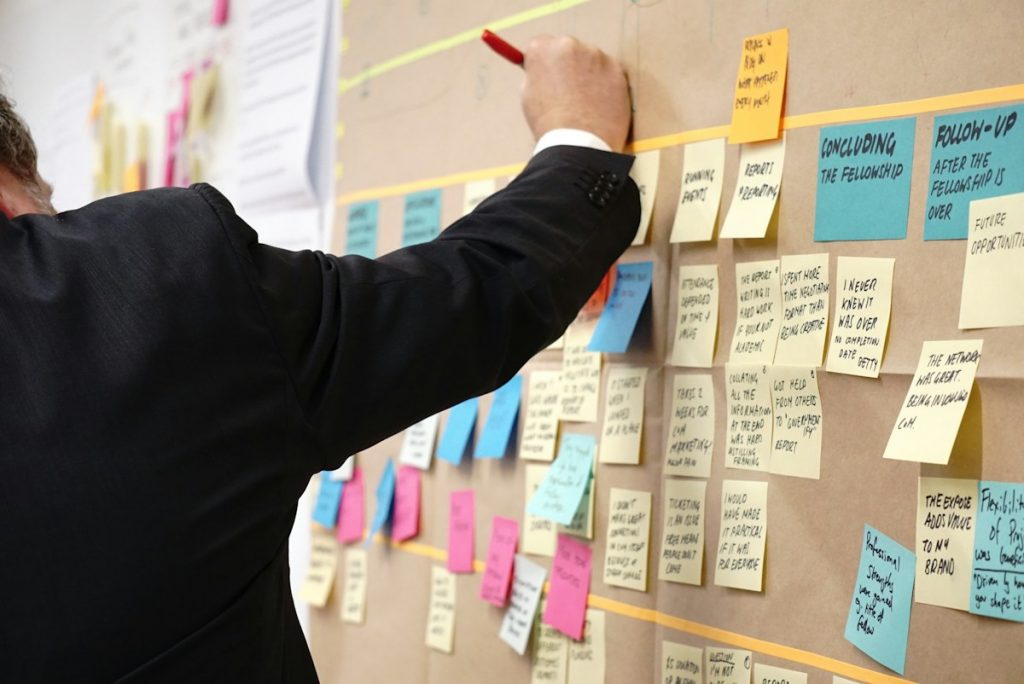
Why Most Endorsement Applications Flop (And How AI Scenario Planning Fixes It)
Securing endorsement for a UK Innovator Founder Visa is notoriously brutal. Endorsing bodies do not just glance at your pitch deck and nod you through. They want to know what happens when things go completely pear-shaped. If your business plan only shows smooth sailing, you will get rejected. They demand proof that your enterprise is viable, scalable, and genuinely innovative under market stress. That is where mastering Innovator Founder Scenario Planning becomes your secret weapon. When you run rigorous what-if models on cash runways, supply shocks, and customer acquisition, you show assessors that you are an agile founder ready for real-world turbulence.
Navigating Home Office expectations requires deep foresight, yet building multi-layered contingency models manually takes weeks. Fortunately, modern founders no longer need to burn hundreds of consulting hours drafting static spreadsheets. By tapping into an AI-Powered UK Innovator Visa Application Assistant, you can stress-test your business model in real time, uncovering blind spots before an endorsing body assessor spots them for you. Combining generative AI with multi-agent reasoning lets you build bulletproof contingency plans that satisfy strict UK immigration criteria quickly.
The Problem with Static Plans in a Fast-Moving UK Market
Most visa applicants treat their business plan like a fixed university dissertation. They draft one baseline forecast, assume steady month-on-month growth, and hand it over.
Here is the cold truth: endorsing bodies reject plans that read like wishful thinking. In business, things break. Competitors launch surprise features. UK inflation shifts purchasing habits. Regulatory frameworks evolve. When you present only a best-case trajectory, assessors assume you lack commercial maturity.
Traditional contingency scenario planning used to be reserved for giant multinational corporations. Energy giants spent decades running complex workshops to anticipate global market swings. Small startups simply did not have the headcount, budget, or data science capabilities to map out five different operational realities.
Today, that resource gap is gone. By leveraging modern agentic AI systems, even a solo founder can simulate dozens of market conditions in minutes. Rather than guessing how a 20% jump in customer acquisition costs might hit cash flow, you can simulate it, adapt your staffing plans, and outline clear mitigation triggers in your endorsement pack.
Core Pillars of the UK Innovator Founder Route
Before diving into contingency models, remember the three mandatory pillars that every endorsing body evaluates:
- Innovation: You cannot just open a standard service shop. Your venture must offer a genuine market disruption or technological edge in the UK.
- Viability: Can the business actually survive? Do your financial projections hold up when revenue ramps slower than expected?
- Scalability: Is there clear evidence of structured planning for high-growth potential and domestic job creation?
Your contingency models sit right at the heart of viability and scalability. If your supply chain dries up or your tech lead leaves, does the business grind to an immediate halt?
When assessing your readiness, platforms like Torly.ai assess these dimensions across your whole application. To get your draft materials up to standard without delays, you can Build your Business Plan NOW and see where your operational assumptions fall short.
How Generative AI Transforms Contingency Scenario Planning
Contingency scenario planning (CSP) compresses traditional long-term strategic forecasting into fast, actionable response windows. Research from management journals shows that large enterprises use generative tools to identify trends, create hypothetical stresses, and evaluate trade-offs rapidly.
For an early-stage startup, generative AI levels the playing field in four specific ways:
1. Spotting Hidden Anomalies
Entrepreneurs suffer from natural confirmation bias. You love your product, so you downplay potential market threats. Generative algorithms do not have emotional attachments. They cross-reference macroeconomic data, industry trends, and competitor movements to highlight risks you likely ignored.
2. Formulating Multi-Branch Scenarios
Instead of a single spreadsheet showing predictable sales, AI models generate plausible alternatives:
* Scenario A (Supply Crunch): Key software vendor prices jump 40%.
* Scenario B (Slower Sales Cycle): Enterprise clients take nine months to sign instead of three.
* Scenario C (Regulatory Shift): New UK data compliance mandates require unexpected infrastructure spend.
For every branch, you can establish clear indicators, operational pivots, and alternative revenue streams.
3. Evaluating Strategic Trade-Offs (Efficiency vs. Resilience)
When unexpected costs hit, what gives? Do you pause marketing, slow down hiring, or cut product features? AI scenario engines help you evaluate trade-offs based on operational resilience, cost efficiency, and brand prominence.
Using sophisticated systems built for visa readiness, founders can run advanced simulations through Innovator Founder Scenario Planning to build high-confidence operational playbooks.

Integrating Specialised AI Agents into Visa Documentation
Relying on a generic chatbot to build your UK Innovator Founder Visa pack is a recipe for disaster. Generalist models lack deep context regarding endorsing body rubrics, UK immigration rules, and commercial benchmarks. They produce fluffy paragraphs that lack hard operational detail.
This is why dedicated agentic workflows matter. In an advanced platform like Torly.ai, specialised AI agents tackle distinct elements of your application:
- Idea Qualification Agent: Validates whether the venture offers defensible IP and real innovation against current UK market incumbents.
- Market Research Agent: Identifies realistic target customer segments, sizing metrics (TAM, SAM, SOM), and pricing strategies.
- Financial Modelling Agent: Stresses cash flow, burn rate, and scenario pathways based on varied customer acquisition metrics.
- Visa Compliance Agent: Audits every narrative section against the latest Home Office guidance to eliminate compliance red flags.
By distributing tasks across specialised systems, your business plan reflects deep analytical rigour. Rather than spending weeks wrestling with generic prompts, you can deploy the TorlyAI BP Builder APP to produce structured, endorsement-ready documentation backed by 31 targeted skills.
Step-by-Step: Constructing Your AI-Driven Contingency Framework
Want to build an endorsement-worthy contingency plan? Here is the exact process you should map out inside your documentation:
Step 1: Map Core Vulnerabilities
Group your startup’s operational resources into distinct buckets:
* Human Resources: What critical technical or commercial skills are missing?
* Financial Resources: What is your true runway under zero revenue for six months?
* Technology & IP: What dependencies exist on third-party APIs or infrastructure?
Step 2: Define Three Plausible Disruption Vectors
Do not invent science-fiction catastrophes. Focus on realistic UK market shifts:
* A major domestic competitor launches a heavily discounted rival tool.
* Your primary marketing acquisition channel doubles its cost per lead.
* A key hiring round takes six months longer than planned due to regional talent shortages.
Step 3: Script the Operational Pivot
For each vector, detail your exact playbook:
* What early-warning metric alerts you to the problem?
* Which non-essential expenditures freeze immediately?
* How does your value proposition adapt to protect gross margin?
Endorsing bodies love this level of granular foresight. It signals that you are not just a dreamer; you are a disciplined operator capable of steering a UK company through volatile economic cycles.
Moving from Static Documents to Dynamic Readiness
The days of handing in an inflexible, 60-page PDF filled with unchecked optimism are officially over. Endorsement panels review hundreds of submissions every month. They can spot cut-and-paste financial models instantly.
To secure approval on your first attempt, your operational narrative must be intelligent, adaptive, and meticulously structured. Automated scenario modelling proves that your business possesses both the commercial stamina to thrive and the flexibility to withstand unexpected shocks.
Take control of your application today. Accelerate your roadmap, simulate vital market contingencies, and access continuous guidance with the AI-Powered UK Innovator Visa Application Assistant to turn your entrepreneurial vision into an approved UK reality.
