
Torly.ai · September 6, 2026
AI-Powered UK Innovator Visa Application Assistant: Navigating the UK Startup Ecosystem for International Talent
Equip yourself with comprehensive 4F readiness scores and automated compliance checks through the AI-Powered UK Innovator Visa Application Assistant to launch your enterprise in the UK.

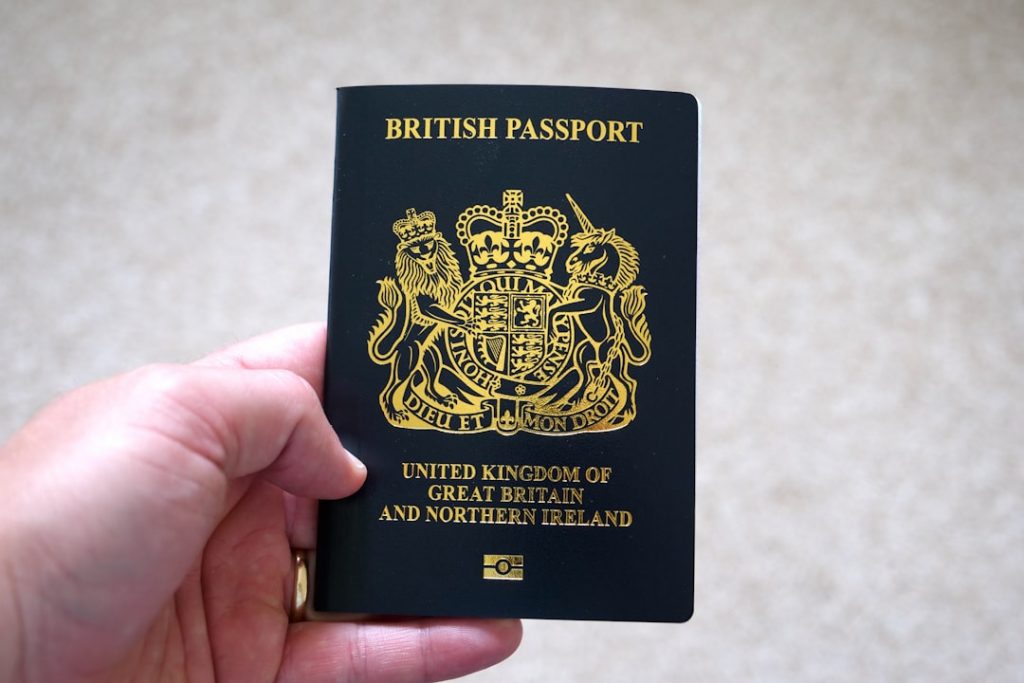
Cracking the Home Office Code: Your Fast Track into the British Innovation Scene
Moving to Britain to build a tech startup sounds thrilling until you run headfirst into immigration bureaucracy. Most international founders assume that having brilliant code or an early working prototype is enough to secure entry. It is not. The UK Innovator Founder route demands strict adherence to Home Office criteria, commercial viability, and rigorous endorsement body audits. Getting your documentation rejected because your financials look weak or your compliance checks failed is frustrating, expensive, and completely avoidable. That is why founders now lean on an intelligent UK Visa Compliance Checker to test their readiness before risking a formal submission.
Navigating this terrain requires shifting your mindset from purely building a product to satisfying rigid legal baselines. Whether you are transitioning out of a British university after your Master’s degree or relocating your seed-stage company from abroad, the standard for endorsement remains uncompromising. The system demands demonstrable proof that your business is genuine, inventive, viable, and scalable. By adopting an automated evaluation platform, you can audit your venture across each criterion, fix dangerous blind spots, and present an application that endorsing bodies cannot ignore.
Why the Traditional Immigration Route Breaks Down for Founders
Let us be honest about traditional immigration channels. They were created for routine situations: standard employment contracts, family ties, or university degrees.
Consider how universities handle foreign students. Higher education institutions like Cardiff University operate dedicated visa and immigration teams. They issue your Confirmation of Acceptance for Studies (CAS), audit your attendance records, verify your biometric residence permits (BRP), and track police registration steps. That structured environment works well because educational pathways follow predictable rules.
Founding an enterprise is the exact opposite.
Startups are messy, fluid, and risky. When you step outside university corridors or traditional skilled work setups, no compliance officer holds your hand. You must deal directly with independent endorsing bodies authorised by the Home Office. These bodies do not care how many hours you studied or how polished your academic CV looks; they care about market validation, intellectual property defensibility, job creation projections, and cash-flow runways.
Traditional immigration solicitors often fall short here too. While a solicitor understands the immigration rules, they rarely understand software unit economics, customer acquisition costs, or API integrations. If you pay thousands of pounds to a legal firm that cannot critically evaluate your technical architecture, you end up with legally phrased plans that endorsing bodies toss aside for lack of commercial substance.
Deconstructing the Endorsement Criteria: Viability, Scalability, and Innovation
Endorsing bodies judge your venture against three pillars. If you miss even one, your application fails immediately.
1. Innovation
You cannot launch a standard digital marketing agency, an ordinary e-commerce shop, or a typical recruitment consultancy under this route. The Home Office insists on a business plan that introduces genuine innovation to the UK market. You must prove you are creating or using proprietary technology, addressing an unmet demand, or bringing a clear competitive advantage that domestic players do not already offer.
2. Viability
Do you have the skills, market knowledge, and financial resources to actually pull this off? Endorsing officers scrutinise your operational budgets, cash-flow projections, and break-even timelines. They also look at you as an entrepreneur. If you have never run a project, managed budgets, or operated within your target sector, your viability score plunges. You must show realistic milestones backed by credible market research.
3. Scalability
Your venture cannot remain a lifestyle business. You need to demonstrate structured plans for job creation for settled UK workers and clear potential for national and international growth. If your pitch does not show how you scale revenue faster than headcount, you will not receive an endorsement letter.
Auditing these three areas on your own usually leads to confirmation bias. You think your concept is clear because it lives inside your head, but an evaluator sees gaps. Using an AI-Powered UK Innovator Visa Application Assistant gives you an unvarnished, objective evaluation of where your narrative stumbles before an official reviewer sees it.
How Multi-Layered AI Reasoning Changes the Game
This is where next-generation legal technology takes over. Instead of relying on guesswork or generic document templates, modern founders turn to deep reasoning models.
Platforms like Torly.ai assess applications across three critical dimensions simultaneously:
- Business Idea Qualification: Running algorithmic checks against Home Office guidelines to score novelty, market defensibility, and scalability.
- Applicant Background Assessment: Analysing your past commercial experience, technical capabilities, and leadership profile to determine founder-market fit.
- Gap Identification & Action Roadmap: Pinpointing specific weak links in your balance sheet assumptions, target demographics, or intellectual property protections.
Instead of receiving a vague rejection weeks down the line, you get actionable feedback within 48 hours. If your customer lifetime value looks unrealistic compared to your acquisition spend, the system flags it. If your governance plan lacks essential British legal provisions, you get direct prompts to rectify the language.
When preparing your submission portfolio, you can Build your Business Plan NOW by generating structured, EB-aligned documentation that answers hard regulatory questions up front.
The Core Pitfalls International Talent Must Avoid
Having evaluated numerous international startup concepts, we see the exact same mistakes repeated every month.
Over-Reliance on Vanity Metrics
Founders love showing survey results saying, “90% of people surveyed would buy this app.” Endorsing bodies despise this. They want verified waitlists, signed letters of intent (LOIs), pilot contracts, or documented user interviews.
Ignoring Share Capital and Corporate Governance
Under UK corporate law, your corporate framework matters. You must explain your share capital structure, your articles of association, and how decisions are made among directors. If your cap table looks predatory or poorly structured, endorsing bodies view your enterprise as legally vulnerable.
Academic Pitching vs Commercial Pitching
Transitioning from an MSc or PhD programme into a commercial startup is notoriously tricky. Academics love explaining how the technology works down to the smallest algorithm. Endorsing bodies want to know who pays for it, how much it costs to sell, and what prevents a competitor from copying it.
To ensure your venture satisfies both legal parameters and investor-grade criteria, deploy the TorlyAI BP Builder APP to turn your raw research into an endorsement-ready commercial pitch.
Bridging the Gap: From Student Visas to Innovator Founder Status
Thousands of international graduates complete their studies in Britain each year, supported by international student services across universities like Cardiff, Manchester, or Imperial. Most rely on the two-year Graduate Visa route as a temporary breathing space.
While the Graduate Visa lets you work or freelance, it has a strict expiration date and cannot be extended. It also does not count directly towards permanent settlement (indefinite leave to remain) on the shorter five-year track.
The Innovator Founder route, by contrast, puts you on a rapid three-year pathway to permanent British residency, provided you meet your business development milestones. Switching from a Graduate or Student route into an Innovator Founder visa requires proactive planning. You must demonstrate that your concept is completely original, not an extension of routine employment.
Integrating a comprehensive UK Visa Compliance Checker during your final university semester lets you stress-test your business concept early, turning your thesis or side project into a viable British business long before your academic visa expires.
Steps to Prepare an Endorsement-Ready Dossier
If you want to secure an endorsement on your first attempt, follow this structured roadmap:
- Draft Your Lean Business Model Canvas: Map out your customer segments, cost structures, and revenue streams with absolute clarity.
- Conduct Secondary and Primary UK Market Research: Gather concrete data on British competitors, local market trends, and pricing norms. Do not generalise from your home country’s economy.
- Audit Your Profile for Immigration Compliance: Verify that you meet standard maintenance fund requirements, English language criteria, and identity verification checks.
- Run Automated Gap Analysis: Use specialised AI agents to parse your draft documentation. Fix flagged discrepancies in your operational timeline or hiring forecasts.
- Finalise Endorsement Submission Packs: Format your executive summary, financial spread, and founder pitch deck to match the precise template preferences of your chosen endorsing body.
Transforming Immigration Uncertainty into Execution
The UK startup ecosystem remains one of the most vibrant hubs in the world for venture capital, accelerator programmes, and commercial talent. However, the legal gateway into this market will never be casual. The Home Office continuously updates regulations to weed out non-genuine applicants and promote high-calibre international founders.
You can navigate these hurdles through manual trial and error, spending months drafting documents that might miss the mark, or you can leverage specialised evaluation tools built specifically for this route. By employing advanced reasoning models that evaluate your concepts against real endorsing body benchmarks, you replace guesswork with mathematical certainty.
Do not let administrative compliance stall your commercial vision. Put your application through a rigorous UK Visa Compliance Checker today, close your operational gaps, and take your seat in the UK innovation economy with complete confidence.
