
AI in Asylum and Migrant Support · November 1, 2026
Ethical AI for Global Founders: How AI-Powered UK Innovator Visa Application Assistant Empowers Transparent Visa Readiness
Explore how AI-Powered UK Innovator Visa Application Assistant sets the benchmark for ethical legal tech by rigorously preparing evidence-backed business plans that satisfy endorsing bodies without algorithmic bias.

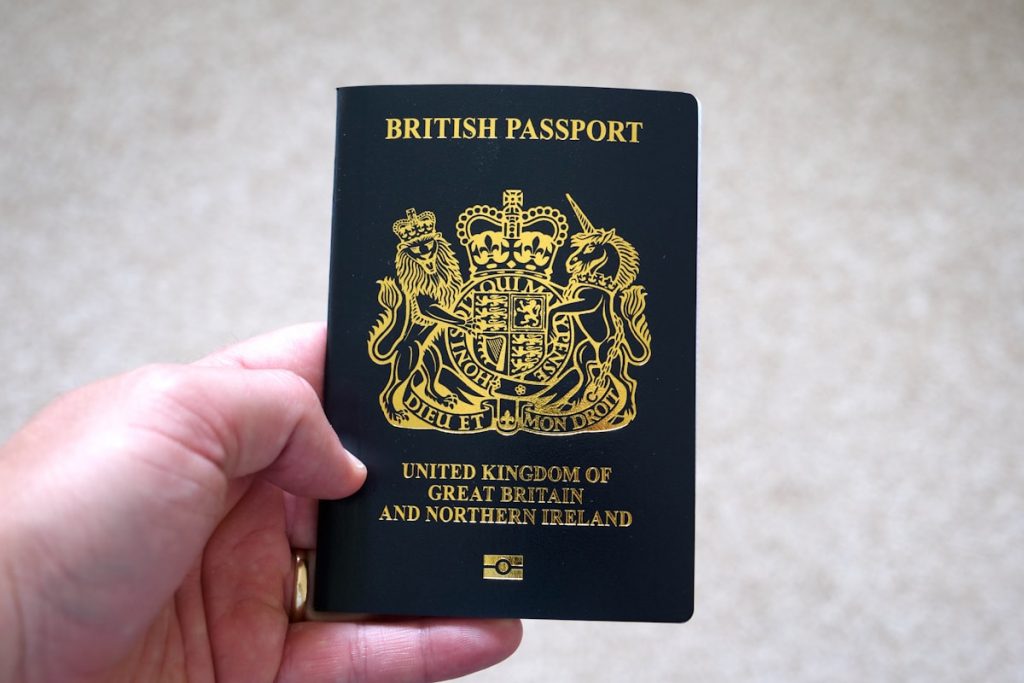
The New Frontier: Why Transparent Visa Readiness Matters for Global Founders
Applying for a UK visa used to mean wading through hundreds of pages of Home Office guidance, paying eye-watering retainers to traditional consultancies, and hoping an assessor understood your startup concept. Today, artificial intelligence is rewriting that narrative. The integration of AI Assisted UK Immigration tools represents a dramatic leap forward for entrepreneurs worldwide. Instead of guessing how an endorsing body will judge your venture, modern founders can now rely on transparent algorithmic readiness assessments that benchmark their business plans against genuine regulatory standards.
Navigating this path requires more than generic automation; it demands an intelligent system that understands the fine balance between technical eligibility and commercial viability. That is where an AI Assisted UK Immigration tool transforms the journey, turning opaque bureaucracy into clear, actionable development milestones. By stripping away arbitrary guesswork and focusing entirely on verifiable evidence, international entrepreneurs gain the clarity they need to present viable, scalable enterprises to British endorsing bodies.
The Double-Edged Sword: AI in Government Enforcement vs Founder Empowerment
Artificial intelligence in immigration policy is not a theoretical future; it is happening right now across Britain. Over recent years, public discussions have highlighted how official bodies pilot automated systems to manage backlogs. Tools like AI Case Summarisation (ACS) and automated policy search engines have been introduced to streamline paperwork.
Yet, public scrutiny has revealed genuine concerns about institutional automation:
- Secretive prioritization algorithms: Systems like IPIC (Identify and Prioritise Immigration Cases) have drawn criticism from migrant rights organisations for creating automated recommendations around casework without sufficient public transparency.
- The risk of systemic bias: When machine learning models are trained on historic refusals or enforcement data, they risk embedding nationality or demographic biases directly into the decision pipeline.
- The rubber-stamp effect: Caseworkers facing severe workload targets might default to algorithmic nudges simply because disputing machine suggestions requires more administrative justification.
- Black-box decision making: When an algorithm downplays an applicant’s background without transparent reasoning, mounting an effective legal challenge becomes exceptionally difficult.
These state-side experiments reveal an uncomfortable reality: when AI is deployed as a mechanism of control, it risks amplifying institutional opacity.
However, when applied as founder-facing legal technology, the exact opposite occurs. Founder-focused AI acts as an equaliser. Instead of keeping criteria hidden, ethical founder tech exposes the exact criteria used by endorsing bodies, showing applicants where their documentation falls short before they spend thousands of pounds on application fees.
To build an application that stands up to scrutiny, you can Build your Business Plan NOW using objective evaluation frameworks that mimic genuine assessment rubrics.
Demystifying the UK Innovator Founder Visa Criteria
To understand how artificial intelligence helps, we must first look at what British endorsing bodies actually look for. The UK Innovator Founder Visa route is notoriously strict. You cannot simply present an existing business model and expect an endorsement letter. Endorsing bodies evaluate every applicant across three strict legal pillars:
1. Innovation
Your venture cannot be a simple replica of an existing high street business or common digital agency. You must prove genuine innovation:
* A proprietary process, unique intellectual property, or novel product architecture.
* A clear technological or operational advantage over existing UK market solutions.
* Documented research showing why incumbent competitors cannot easily duplicate your offer.
2. Viability
An innovative idea is meaningless if the business cannot survive financially. Endorsing bodies demand rigorous proof:
* Realistic financial projections based on validated customer acquisition costs and market margins.
* Evidence of market demand, including letters of intent, pilot tests, or targeted consumer surveys.
* A clear understanding of UK regulatory compliance, employment overheads, and operational costs.
3. Scalability
The Home Office expects Innovator Founders to create high-value jobs and contribute meaningfully to the British economy:
* A structured hiring plan demonstrating UK job creation over a three-year period.
* A scalable operational model that can expand across domestic and international markets.
* Demonstrable founder capability, proving you possess the specific domain skills required to execute the vision.
Meeting these three standards simultaneously requires deep commercial insight. For an in-depth breakdown of these baseline expectations, review our guide on UK Innovator Visa requirements explained by AI-Powered UK Innovator Visa Application Assistant.
How Agentic AI Restores Fairness: The Torly.ai Architecture
Traditional immigration consulting has long suffered from human inconsistency. One consultant might praise a marketing strategy, while another dismisses it entirely. Moreover, human review cycles can take weeks, stalling time-sensitive market launches.
Torly.ai approaches founder readiness through deterministic, multi-layered AI reasoning agents. Rather than relying on simple text generators that produce generic fluff, Torly.ai acts as an intelligent visa readiness analyst, business evaluator, and structural advisor.
Global founders use the specialised TorlyAI BP Builder APP to navigate these multi-layered readiness checks, systematically addressing blind spots before submitting their ventures to panel review.
Eliminating Algorithmic Bias Through Objective Scoring
Unlike opaque bureaucratic systems, ethical legal tech must be completely auditable. Torly.ai evaluates business propositions against empirical market metrics rather than demographic indicators. It tests your unit economics, evaluates competitive moats, and reviews founder track records against the specific commercial requirements of the startup.
By deploying 24/7 autonomous agents, the platform offers immediate, dynamic scoring. If your projected gross margin is mathematically inconsistent with your hiring plan, the system flags the issue directly, explaining why an endorsing body analyst would question it.
For founders who want to see how these automated evaluations replace slow agency consultations, explore why founders choose AI-Powered UK Innovator Visa Application Assistant over traditional agencies.
Preparing Evidence-Backed Business Plans That Pass Scrutiny
Writing a business plan for an endorsing body is completely different from writing an investor pitch deck. Venture capitalists often look for explosive potential and founder charisma; endorsing bodies look for regulatory compliance, verified market fit, and downside risk protection.
A successful visa-ready business plan must feature:
- Defensible Competitor Matrix: Clear acknowledgement of existing UK firms with an explanation of your defensible technical moat.
- Validated Financial Forecasting: Granular, month-by-month cash flow projections that balance development costs, operational burn, and UK payroll taxes.
- Governance and Milestones: Clear 6, 12, and 24-month operational targets that prove the business will remain viable during its mandatory checkpoint reviews.
When founders build their documentation with our AI-Powered UK Innovator Visa Application Assistant, they receive tailored documentation structured specifically to satisfy endorsing body panels, achieving up to a 95% historic endorsement readiness score with an average processing turnaround of just 48 hours.
Moving Beyond Documentation: Pitch Defence and Readiness
Securing an endorsement does not end with submitting a PDF. Once an endorsing body reviews your initial documentation, you are almost always summoned to defend your concept in an interview panel.
Assessing panels will probe every perceived vulnerability:
* “Why would a UK customer switch from established solutions to your platform?”
* “What happens if your customer acquisition cost doubles during Year 2?”
* “Do you personally possess the technical capacity to build your minimum viable product without outsourcing core IP?”
If your answers contradict the figures inside your written business plan, the endorsement will be refused on viability grounds. Preparing for these high-stakes discussions requires structured rehearsal.
To refine your oral delivery under simulated pressure, review our practical guide on how to simulate endorsing body panels: AI-Powered UK Innovator Visa Application Assistant mock interview guide. Rehearsing realistic line-by-line questioning ensures that your spoken pitch perfectly aligns with your submitted data room.
The Path Forward: Ethical Legal Tech for Global Entrepreneurs
The conversation surrounding artificial intelligence in migration will continue to evolve. While state institutions experiment with automation to clear backlogs, global entrepreneurs deserve equal technological leverage to present their ideas fairly, accurately, and without bias.
Ethical legal tech levels the playing field. It democratises access to elite business consulting, removes geographic and linguistic disadvantages, and ensures that innovative ideas are judged strictly on their merits.
If you are ready to turn your venture idea into an endorsement-ready UK business, leverage the precision of AI Assisted UK Immigration today, and enter your endorsement interview with absolute confidence in your commercial viability.
