
Residence Permits for Entrepreneurs · September 7, 2026
France vs UK Entrepreneur Routes: Why Torly.ai Optimises Your UK Innovator Founder Visa Business Plan
Compare European self-employed pathways with Britain and discover how Torly.ai automates endorsement-ready business plan preparation for UK Innovator Founder Visa success.

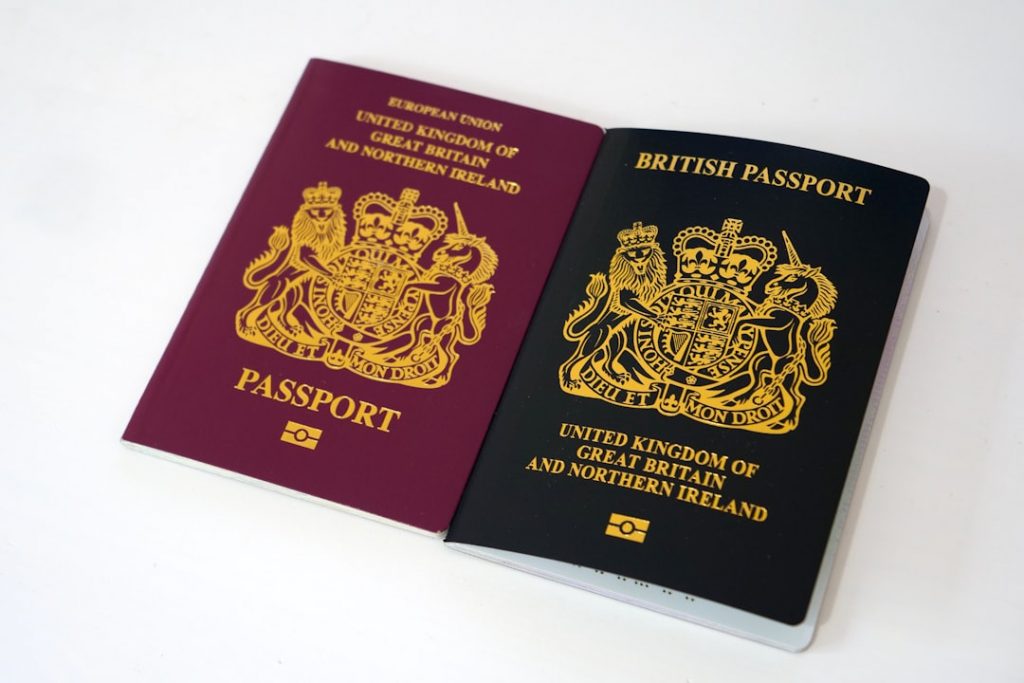
The European Crossroads: Choosing Your Founder Pathway
Deciding where to launch your next enterprise across the English Channel comes down to two radically different visions of entrepreneurship. On one side, France invites non-EU nationals through its classic long-stay self-employed pathway (activité non salariée ou libérale), prioritising established credentials, minimum wage thresholds, and regional administrative vetting. On the other side, Britain has retired its legacy schemes, replacing them with the high-stakes Innovator Founder Visa. If you want to scale fast in an aggressive venture ecosystem, drafting a world-class UK Startup Visa Business Plan is no longer about checking boxes; it is about proving breakthrough innovation, deep commercial viability, and ruthless international scalability to authorised endorsing bodies.
While the French route appeals to consultants, artisans, and single-operator consultancies wanting a steady lifestyle inside the Schengen area, the UK route demands true market disruptors. Getting accepted in Britain requires surviving an endorsement process that filters out ordinary trades. You are not simply applying to civil servants at the Home Office; you are pitching professional business analysts who scrutinise every financial forecast and tech stack assumption. Navigating these regulatory waters requires precision, which is why founders rely on platforms like Torly.ai to turn raw concepts into endorsement-ready applications.
Understanding the French Independent Route: Stability Over Disruption
To appreciate why the UK framework is so demanding, look at how the French system works. France manages foreign entrepreneurs under the profession libérale or commercial/craftsperson visa.
The process centres around three core pillars:
- Proof of Economic Viability: You must prove that your planned activity will generate at least the French statutory national minimum wage (the SMIC, roughly 1,400 euros net per month).
- Professional Credentials: If you plan to work in a regulated sector (like law, architecture, accountancy, or healthcare), you must present recognised French diplomas or formal equivalency certificates.
- Administrative Clearance: Before you get your visa stamp, your dossier goes through regional bodies like the DREETS (formerly DIRECCTE). They examine whether your business could disrupt local commercial balances or if you genuinely possess the capital reserves to sustain yourself.
It is a traditional, bureaucratic review. If your bank account is healthy, your qualifications check out, and your business model looks like a standard, functional agency or consultancy, France usually gives you a pathway to temporary residency.
Yet, there is a catch: you are largely stuck operating within the constraints of local bureaucracy, strict employment laws, and comparatively conservative local venture financing. For deep-tech, fintech, and high-growth software founders, this route often feels restrictive.
The UK Innovator Founder Visa: The Bar Has Shifted
Britain took a completely different turn. When the old Tier 1 schemes were phased out, the Home Office introduced the Innovator Founder Visa. They effectively outsourced the initial gatekeeping role to specialised endorsing bodies (such as Envestors, UK Endorsing Services, Innovator International, and The Global Entrepreneurs Agency).
These endorsing bodies do not care if you can open a standard coffee shop or freelance as an IT consultant. They look for three non-negotiable criteria defined by the Home Office:
- Innovation: Do you have a genuine, original business plan that meets new or existing market needs, creating a significant competitive advantage?
- Viability: Does the venture possess realistic commercial viability? Do you, as the founder, have the operational skills, technical background, and market knowledge to deliver it?
- Scalability: Is there clear evidence of structured planning, potential for high-value job creation, and realistic expansion into domestic and international markets?
If you submit a run-of-the-mill pitch, rejection is practically guaranteed. The legacy concept of the UK Startup Visa Business Plan has evolved into a demanding, forensic document that must pass rigorous evaluation before any visa officer even looks at your passport.
Where Traditional Applicants Fail: The Endorsement Gauntlet
Most foreign founders fail long before they submit their visa fees. They fail at the endorsing body stage because they treat an endorsement document like an ordinary bank loan proposal.
A typical mistake involves presenting generic projections. If an applicant simply downloads a template, enters arbitrary numbers, and claims they will capture 2% of a multi-billion-pound market in Year Two, endorsing bodies throw it out immediately. Endorsing bodies want to see unit economics, validated customer acquisition costs (CAC), calculated lifetime value (LTV), intellectual property defensibility, and UK labour market compliance.
They also analyse founder-market fit. Can you pull this off? An endorsement panel assesses whether your career background backs up your technology stack. If an applicant with a purely sales background pitches an autonomous robotics platform without a verified technical co-founder or an airtight engineering roadmap, the application collapses under scrutiny.
To bridge this massive gap between founder ideas and institutional expectations, many entrepreneurs leverage specialised desktop software to Build your Business Plan NOW, ensuring every technical and commercial gap is resolved prior to submission.
How Torly.ai Powers Your Innovator Founder Visa Strategy
This is where Torly.ai steps in. Rather than operating like a generic text generator, Torly.ai is built as an advanced, evaluation-driven intelligence platform tailored specifically to UK immigration and endorsement standards.
Torly.ai acts as an automated visa readiness analyst and improvement advisor. It operates through multi-layered assessments across the three dimensions that endorsing bodies care about:
1. Business Idea Qualification
The platform interrogates your proposal against live endorsing body benchmarks. It identifies whether your solution represents genuine technological or operational innovation, or if it risks being flagged as an ordinary business model.
2. Applicant Background Assessment
The system analyses your professional track record, technical capabilities, and leadership experience. It checks whether your profile naturally supports the execution of the business, flagging areas where you might need advisory board members, technical partners, or certified credentials.
3. Gap Identification and Strategic Roadmap
Instead of simply telling you what is wrong, Torly.ai generates actionable roadmaps. If your customer acquisition model is too vague, or your financial runway overlooks UK national insurance contributions and corporation tax realities, the system flags these pitfalls instantly.
By relying on real-time reasoning models, our AI-Powered UK Innovator Visa Application Assistant provides an objective, 24/7 critique of your application package, identifying flaws before an endorsing panel sees them.
Comparing Pathways: France vs the UK
To decide where your venture belongs, consider how the two countries compare across key operational metrics:
| Metric | France Self-Employed (Activité non salariée) | UK Innovator Founder Visa |
|---|---|---|
| Primary Gatekeeper | Consular authorities and regional labour offices (DREETS) | Home Office-approved independent endorsing bodies |
| Core Hurdle | Economic self-sufficiency and formal qualifications | True technological/commercial innovation and scalability |
| Capital Requirement | Proof of minimum subsistence funds (SMIC equivalent) | No statutory minimum, but requires sufficient capital to scale |
| Speed to Settlement | Generally 5 years to permanent residency | Fast-track to Indefinite Leave to Remain (ILR) in just 3 years |
| Team Requirement | Geared towards independent operators/freelancers | Supports solo founders or co-founding teams scaling ventures |
| Market Orientation | Local and European domestic markets | Rapid global scaling with international export focus |
The French route is simpler if your goal is personal freelancing, artisanal commerce, or running a traditional service firm inside Europe. But if you are building an enterprise with venture funding potential, rapid job creation, and global ambitions, the UK offers an unmatched advantage, including a fast-track route to permanent settlement in just three years.
Achieving that requires an exceptional narrative. Many founders choose to deploy a dedicated TorlyAI BP Builder APP to draft their documentation, ensuring their growth projections match UK fiscal rules seamlessly.
Step-by-Step: Preparing an Endorsement-Ready UK Plan
If you choose the UK route, how do you construct a proposal that sails through review? The process requires a methodical build.
Phase 1: Validating Genuine Innovation
Your venture must solve an industry-wide inefficiency. Highlight your proprietary software, novel manufacturing approach, unique distribution methodology, or registered IP. If an endorsing body feels that any established UK business could replicate your service tomorrow morning, your innovation score will plummet.
Phase 2: Building Ironclad Financial Forecasts
Your financial statements must be fully realistic. You need three-to-five-year projections covering cash flow, profit and loss, balance sheets, and headcounts. Do not assume immediate profitability. Endorsing bodies expect to see burn rates, clear runway calculations, and contingencies for delayed sales cycles.
Phase 3: Meeting Home Office Employment Benchmarks
One major perk of the Innovator Founder Visa is the clear path to settlement after 36 months. However, to qualify for settlement, your business must hit specific milestones, such as creating at least five or ten full-time jobs for settled workers, or generating substantial revenue targets. Your initial business plan must demonstrate how your operational model makes these hiring targets achievable.
Working through this manually takes months of stressful guesswork. Using automated suites built with multi-agent intelligence, you can craft a bulletproof UK Startup Visa Business Plan that addresses every single requirement laid out by the Home Office.
Overcoming Common Pitfalls in UK Visa Endorsement
Even brilliant founders regularly stumble over the nuances of UK immigration rules. Here are the most frequent issues that lead to rejected applications:
- Vague Market Sizing: Quoting broad industry reports without detailing your specific serviceable addressable market (SAM) or serviceable obtainable market (SOM).
- Neglecting Competitor Analysis: Claiming you have “no direct competitors.” Endorsing bodies interpret this as either a total lack of market demand or lazy research. You must map direct and indirect rivals, clearly defining your moat.
- Ignoring Founder Suitability Rules: Failing to explain how your past achievements give you the domain authority needed to lead the proposed company.
- Unrealistic Timelines: Presenting launch dates that ignore regulatory approvals, UK entity setup, opening corporate bank accounts, and recruiting specialized talent.
Eliminating these errors requires deep scrutiny. By checking your material against live endorsement criteria, you preserve valuable capital, bypass unnecessary consultancy fees, and protect your timeline.
Take the Intelligent Route to UK Expansion
Expanding across borders is among the most consequential bets you will make as a founder. While France offers a stable, well-trodden route for independent professionals who want a comfortable life in the European Union, the United Kingdom remains the preeminent destination for high-growth tech firms, venture-backed startups, and ambitious scale-ups.
Do not let an amateur business plan derail your immigration plans. Leverage next-generation artificial intelligence to audit your venture concept, address structural blind spots, and draft institutional-grade documentation tailored precisely for endorsing body analysts.
Ready to secure your endorsement and launch your venture in Britain? Get the evaluation and structural support you need by visiting Torly.ai, and turn your entrepreneurial ambitions into an endorsement-ready reality today.
