Case Studies · September 17, 2026
Mastering the Innovator Visa Mock Interview: Case Studies with AI-Powered UK Innovator Visa Application Assistant
Discover how successful founders ace endorsing body assessments and secure endorsement using AI-Powered UK Innovator Visa Application Assistant for realistic mock interviews.

Why Most Innovator Founder Visa Pitches Fall Flat Before the Panel
Securing an endorsement for the UK Innovator Founder Visa is one of the most demanding hurdles an international entrepreneur can face. Writing an ambitious pitch deck is simple enough, but sitting across from a panel of assessing officers who scrutinise every operational assumption, financial forecast, and intellectual property claim is an entirely different test. Many applicants mistakenly treat the endorsement panel like a standard venture capital pitch. In reality, assessing bodies assess risk, regulatory adherence, and genuine market disruption against strict Home Office criteria. If you stumble when answering basic questions about your gross margins, scalability barriers, or hiring plans, your endorsement dreams can disappear within twenty minutes.
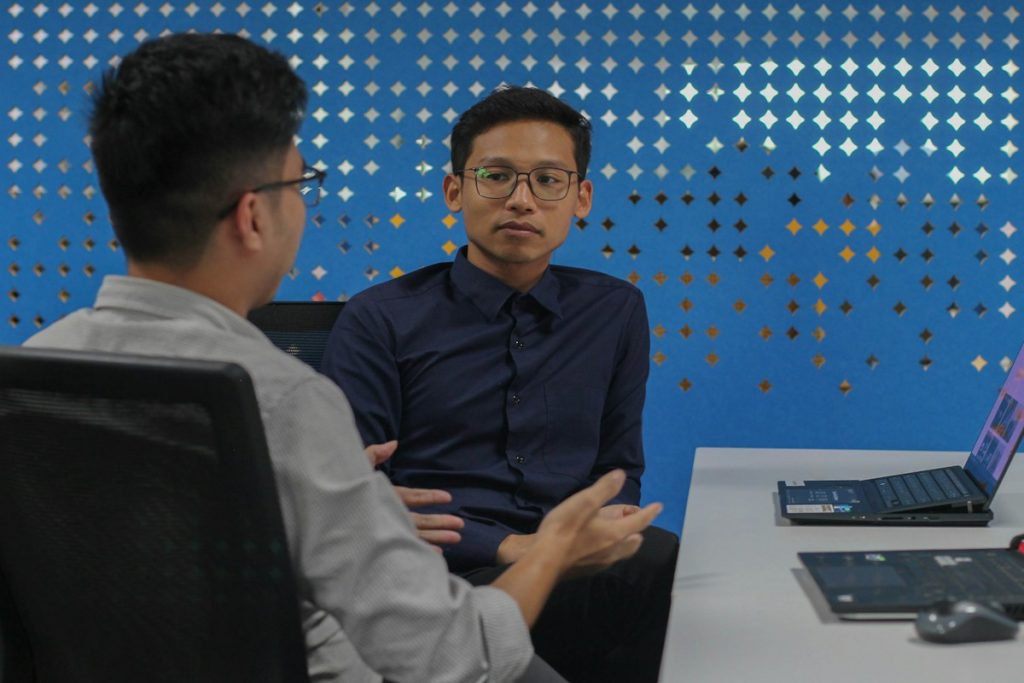
Facing an assessing panel without structured preparation leaves your immigration journey to chance. That is why simulating the hot seat with a realistic Innovator Visa Mock Interview provides the tactical edge needed to turn fragile business ideas into defensible, endorsement-ready enterprises. Through comprehensive simulation sessions, you can identify hidden flaws in your unit economics, pressure-test your viability claims, and articulate the precise uniqueness of your technology long before meeting official assessors.
The Core Criteria Endorsing Bodies Actually Care About
Endorsement panels do not hand out approvals based on raw passion. They evaluate every single venture across three fundamental statutory tests:
- Innovation: Is your business genuinely original? You cannot simply launch a standard retail outlet, a franchise, or an ordinary software consultancy. The venture must offer a distinct solution that introduces something new to the UK market.
- Viability: Does your startup possess realistic financial projections, verified market traction, and a clear operational pathway? The panel expects you to understand your burn rate, customer acquisition costs, and working capital needs.
- Scalability: Can your venture create skilled British jobs and expand internationally? A lifestyle enterprise will be rejected immediately. Assessors want proof of substantial growth potential.
Beyond these three pillars, officers observe your individual credibility as a founder. They want to know if you are truly steering the ship or relying on external advisers who wrote your paperwork for you. When founders cannot explain their technology stack or cash-flow forecasts during an interview, assessors assume the applicant lacks genuine ownership of the venture.
Traditional Visa Consultancies vs. AI-Powered Preparation
Many founders traditionally turn to full-service immigration agencies like Sincere Immigration or Visas Avenue to handle their paperwork. While experienced immigration solicitors can structure visa filings, navigate switching hurdles, and clarify Home Office paperwork, the traditional agency model often runs into friction when evaluating cutting-edge technology or testing founder operational readiness.
The Limits of Static Consulting
Traditional agencies typically rely on standard templates and third-party business writers. The lawyer might know the Immigration Rules inside out, but they rarely understand machine learning infrastructure, clean-tech supply chains, or enterprise SaaS sales cycles. Consequently, the mock interviews they conduct are often generic. They rehearse surface-level questions about your resume, leaving technical vulnerabilities unprobed. If an endorsing body begins digging into your API architecture or customer lifetime value calculations, traditional preparation leaves you exposed.
The Advantage of Multi-Agent AI Systems
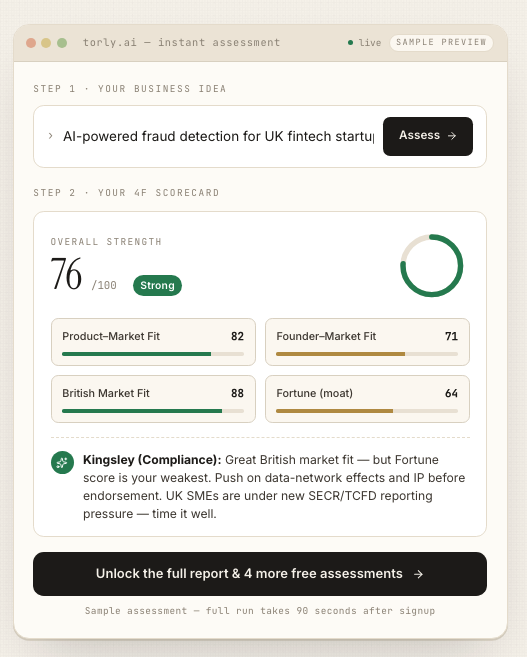
In contrast, intelligent evaluation systems simulate the exact line of questioning that official panels use today. Modern platforms evaluate not just the legal structure, but the underlying business viability. By taking advantage of specialized tools, you can easily Build your Business Plan NOW using comprehensive evaluations that align your startup model directly with endorsing body standards. AI systems do not tire, they do not rely on static boilerplate templates, and they can grill you on corner cases across your supply chain, marketing channels, and regulatory liabilities 24/7.
Case Study 1: Transforming a Green Energy Platform Pitch
Consider the case of Tariq, an environmental systems engineer who developed a predictive logistics platform designed to cut industrial fleet emissions. His early deck was dense with engineering jargon, but his commercial roadmap was thin.
During an initial mock assessment, his operational numbers fell apart. When asked how his fleet software would integrate with legacy logistics software across Britain, his answers were vague. He failed to account for long corporate procurement cycles and had completely overlooked compliance testing rules.
Using an interactive preparation model, Tariq faced five consecutive mock rounds that forced him to defend his gross margins, sales pipeline, and regulatory compliance. Instead of memorising empty answers, he rebuilt his pricing structure and operational milestones. When his actual interview took place with the endorsing body, he calmly navigated forty minutes of technical questioning and secured his endorsement letter without a single follow-up request.
Case Study 2: Turning a SaaS Idea into a Scalable Enterprise
Elena, a founder from Eastern Europe, wanted to bring an automated HR compliance tool to the UK market. Her legal team had completed her personal background documents, but her business plan lacked clear scalability markers. To endorsing bodies, her business looked identical to dozens of existing human resource portals already operating in London.
Elena used an advanced platform to stress-test her narrative. The system forced her to confront difficult counter-arguments: Why wouldn’t an established enterprise competitor build this feature next month? Why did she project a 40% operating margin in year one without accounting for local legal support staff?
To resolve these foundational flaws before her formal interview, she used the TorlyAI BP Builder APP to redesign her financial models, map out defendable IP barriers, and establish a clear hiring schedule for UK engineers. Elena entered her final endorsement assessment prepared for every question regarding market defense, demonstrating how her software addressed a specific gap in UK employment law that larger tools neglected.
The Mechanics of a Realistic Innovator Visa Mock Interview
A high-impact mock interview is not a casual fireside chat. It is a forensic audit of your operational strategy. To run an effective simulation, your preparation should be split into distinct stages that challenge different components of your business.

Stage 1: The Founder Fit Audit
Assessors first want to establish whether you possess the background required to lead this enterprise.
- What specific experience gives you an unfair advantage in this industry?
- Have you previously managed budgets, led developer teams, or scaled operations?
- What gaps exist in your current skill set, and how will your UK recruitment strategy address them?
Stage 2: Innovation and Market Need
Next, the interview transitions to technical defensibility. Assessors will push back on your claims of originality.
- Who are your top three direct competitors in the UK, and why can they not copy your solution?
- What proprietary processes, trade secrets, or patents safeguard your service?
- Can you share evidence of early customer discovery calls or letters of intent?
By working through an intensive Innovator Visa Mock Interview, you can rehearse responses to these confrontational inquiries until your explanations become crisp, natural, and grounded in verifiable data.
Stage 3: Operational Viability and Financial Sanity
This stage causes the highest rejection rates during real endorsement interviews. Panels look for wild assumptions that signal an amateur business plan.
- What is your customer acquisition cost (CAC) and lifetime value (LTV)?
- Walk us through your first twelve months of expenditure line by line.
- If your primary marketing channel doubles in cost, how does that affect your runway?
Common Red Flags That Endorsement Panels Target
Endorsing bodies review hundreds of applications every quarter. Panel members quickly spot red flags that indicate a founder is unprepared for the commercial realities of the UK market:
- Outsourced Knowledge: If you pause and look at notes whenever a technical or financial question is asked, panels assume a consultant drafted your plan. You must know your numbers by heart.
- Unrealistic Growth Curves: Projecting £5 million in revenue by year two with two employees and a £20,000 marketing budget will get your application rejected on viability grounds.
- Vague Hiring Roadmaps: The Home Office mandates job creation for settlement. Saying you will “hire people as needed” shows a lack of planning. You must define specific job titles, median salaries, and quarter-by-quarter hiring milestones.
- Ignoring UK Competition: Claiming there are “no competitors” in your space is an immediate warning sign. It tells the panel that you either have not researched the UK market or that no demand exists for your product.
Founders who fail to catch these issues in advance pay a steep price in lost application fees and months of wasted effort. To verify that your application materials are airtight prior to panel submission, you can Build your Business Plan NOW and audit your operational narrative against genuine endorsing body criteria.
Mastering the Three-Year Settlement Trajectory
The Innovator Founder Visa provides one of the fastest routes to permanent residency in the United Kingdom, allowing successful entrepreneurs to apply for Indefinite Leave to Remain (ILR) after just three years. However, settlement is not automatic. It depends entirely on meeting strict milestone checkpoints managed by your endorsing body at month 12 and month 24.
During your initial endorsement interview, the panel assesses whether your three-year vision is realistic. They will question you on the settlement benchmarks you plan to satisfy, such as:
- Investing at least £50,000 into the business and actively spending it toward growth.
- Doubling your customer base and achieving a higher market share than your UK rivals.
- Creating at least five full-time jobs for settled workers with an average salary of at least £25,000 per year (or ten jobs with no salary minimum).
- Generating at least £1 million in gross revenue in the third year.
If your interview answers do not show a clear, deliberate path toward satisfying at least two of these statutory criteria, the assessing body has little incentive to sponsor you. Rehearsing these long-term milestones ensures your operational answers align seamlessly with your settlement objectives.
Practical Action Plan: Preparing for Your Endorsement Interview
Preparation requires deliberate practice under pressure. To give yourself the highest probability of success, follow this week-by-week protocol:
Week 1: Audit Your Documentation
Reread your business plan and financial model with a critical eye. Highlight every claim, statistic, and growth projection. Ask yourself: Can I produce third-party evidence to substantiate this number on camera? If not, revise the plan immediately.
Week 2: Build Your Defense Catalog
Draft an exhaustive list of the hardest, most sceptical questions a hostile assessor could ask. Focus on your thinnest areas: competitor advantages, regulatory hurdles, and supply chain dependencies. Draft bullet-point answers focusing on facts, metrics, and risk mitigation strategies.
Week 3: Run Interactive Mock Simulations
Do not practice answers inside your head. Speaking your thoughts aloud exposes filler words, hesitation, and illogical jumps. Use an interactive platform to run rapid-fire mock sessions that simulate challenging follow-up questions. For founders wanting complete control over their preparation environment, you can download the TorlyAI BP Builder APP to systematically align your pitch deck, market analysis, and interview responses.
Week 4: Final Stress Testing and Polish
Conduct final mock panels focusing on delivery, pacing, and concise communication. Practice answering questions directly in two or three sentences before unpacking the broader context. Endorsement officers appreciate founders who get straight to the point without meandering or evading difficult topics.
Securing Your UK Entrepreneurial Future
Securing the UK Innovator Founder Visa can redefine your entrepreneurial journey, granting you access to one of the most vibrant startup hubs and capital markets in the world. But passing the endorsement assessment demands more than optimism. It requires rigorous preparation, deep financial comprehension, and total ownership of your venture’s strategic trajectory.
By identifying your weak points early and preparing with an Innovator Visa Mock Interview, you can step in front of any endorsing panel with complete confidence, defend your business model under pressure, and secure your pathway to UK business success.