
Standards and Framework Compliance · September 15, 2026
Meeting Strict Endorsement Benchmarks: Standardise Your Innovation with Torly.ai
Structure your startup according to the highest industry standards and endorse body requirements through compliance tools powered by Torly.ai.

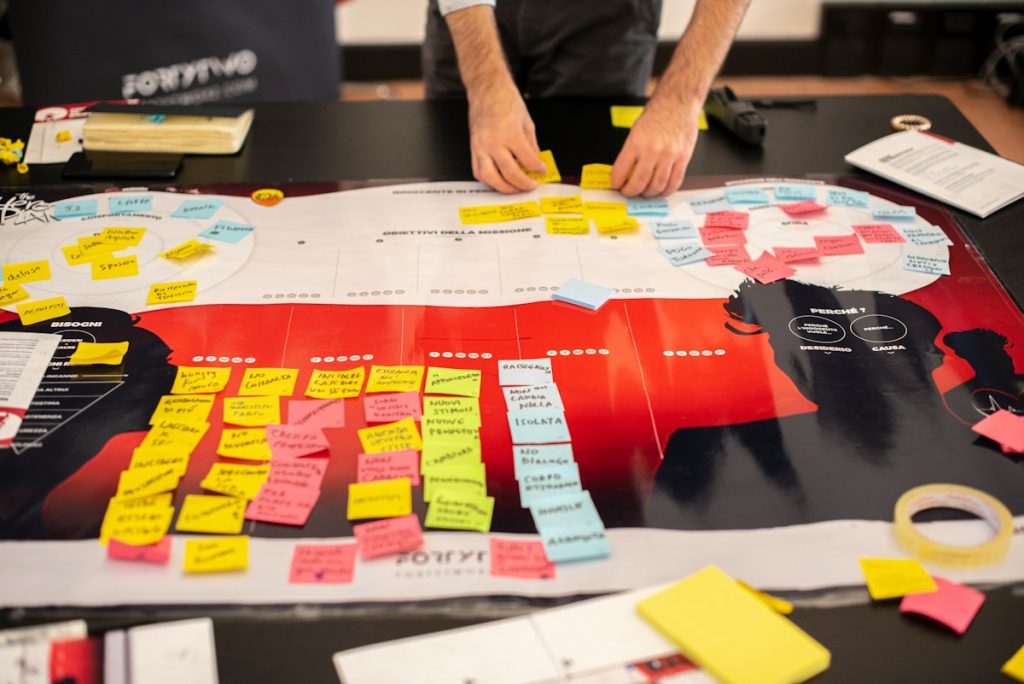
Why Most Startup Ideas Fail the Endorsement Test Before They Even Begin
Getting a business off the ground is tough, but securing a UK Innovator Founder Visa endorsement is a different beast entirely. Every year, thousands of brilliant founders submit their pitches, only to get knocked back. Why? Because having a clever app or an exciting concept is not enough. Endorsing bodies do not bet on raw passion; they look for structured, repeatable execution. To impress them, you must prove that your business operates under a genuine innovation management framework that turns risky assumptions into verifiable commercial milestones. When you lean on an AI-Powered UK Innovator Visa Application Assistant, you strip away the guesswork and align your venture directly with Home Office standards.
Too many founders treat innovation like magic. They think ideas strike like lightning, and that an endorsing body will instantly share their enthusiasm. In reality, assessors evaluate your operational discipline. They want to see how you identify market problems, develop solutions, protect intellectual property, and measure progress over time. A reliable innovation management framework bridges the gap between creative chaos and commercial reality. It shows that you do not just have one good idea today, but a systemic method to deliver value tomorrow.
The Endorsement Dilemma: Innovation vs Process
When an endorsing body reviews your proposal, they ask three questions: Is it innovative? Is it viable? Is it scalable?
Most applicants fail on the first point because they confuse “novelty” with “innovation.” Building a food delivery app for a niche cuisine might be novel, but it rarely qualifies as innovative in the eyes of UK immigration rules. True innovation introduces genuine technical differentiation, intellectual property, or disruptive market efficiency.
More importantly, assessors look at your risk profile. A founder working without structured processes represents a major liability. If your development strategy relies entirely on ad-hoc brainstorming sessions, your venture risks collapsing under pressure.
Here is what assessors dread seeing:
* Vague roadmaps with arbitrary release dates
* Development plans lacking systematic user validation
* Financial forecasts completely detached from operational workflows
* No documented approach to continuous R&D or IP protection
To overcome this hurdle, your business plan must show that your output is intentional, systematic, and resilient.
Why Traditional Standards Like ISO 56001 Fall Short for Early-Stage Startups
If you research structured innovation, you will quickly encounter enterprise standards such as ISO 56001. Developed by international bodies and audited by firms like LRQA, ISO 56001 sets strict rules for managing innovation systems within established corporations.
Certification under ISO 56001 can help large firms streamline compliance, integrate quality controls like ISO 9001, and reassure corporate stakeholders. However, early-stage founders applying for the UK Innovator Founder Visa face a completely different situation.
The Problem with Corporate Certification
- Massive Overhead: Enterprise standards require extensive documentation, steering committees, and expensive external audits that drain early capital.
- Bureaucratic Inertia: A startup needs to pivot rapidly. Corporate governance models often slow down decisions when agility is vital.
- Misaligned Objectives: An ISO auditor checks whether your processes follow written internal manuals. An endorsing body assessor checks whether your specific business model creates UK jobs, scales abroad, and holds genuine commercial potential.
Enterprise frameworks offer great theoretical value, but they are too cumbersome for solo entrepreneurs and seed-stage teams. You need the structural rigour of an enterprise system without the administrative paralysis. You can Build your Business Plan NOW using tools explicitly calibrated to startup reality, rather than spending months preparing for corporate audits.
The Three Pillars of a Startup Innovation Management Framework
To satisfy an endorsing body, your operational model should mirror the best elements of formal standards while remaining lean and adaptable. A high-performing startup framework rests on three distinct pillars.
1. Systematic Problem Discovery and Validation
You cannot validate an innovation simply by asking friends if they like your concept. A robust framework tracks:
* Documented user interviews and customer discovery sessions
* Empirical testing of core assumptions
* Clear competitive positioning against established domestic and international players
Assessors want to see that market demand pull drives your product design, rather than founder bias pushing an unwanted solution.
2. Iterative Development with Clear Governance
How do you decide which features make it into production? An ad-hoc team builds whatever feels exciting. A mature startup implements a stage-gate process:
* Concept screening based on technical feasibility and commercial return
* Prototyping sprints with defined success metrics
* Rapid feedback loops with target industry partners
Documenting this progression proves to endorsing bodies that you manage development risk responsibly.
3. Sustainable IP and Knowledge Management
Innovation is worthless if competitors can copy your entire stack over a weekend. Your framework must show how you protect value:
* Strategic management of trade secrets and software copyright
* Patent application schedules where applicable
* Internal procedures that keep proprietary insights safe within your team
By showing this level of governance, you reassure assessors that your venture can defend its market share over the long run.
How Torly.ai Solves the Compliance Puzzle
Building these systems by hand while writing a comprehensive business plan is daunting. This is why founders use Torly.ai. Instead of leaving you to struggle with confusing visa criteria, Torly.ai acts as an intelligent visa readiness analyst, business evaluator, and improvement advisor.
The platform relies on next-generation reasoning agents to assess your startup across three essential dimensions:
* Business Idea Qualification: Gauging whether your venture meets the Home Office threshold for genuine innovation, commercial viability, and global scalability.
* Applicant Background Assessment: Mapping your professional experience, technical expertise, and leadership track record directly to endorsing body expectations.
* Gap Identification & Action Roadmap: Delivering real-time, actionable steps to strengthen your operational positioning, technology stack, and team architecture.
Rather than relying on static templates, you get an active evaluation environment. The platform offers step-by-step guidance, dynamic scoring against current visa policies, and compliance validation. If you want to accelerate your workflow, the TorlyAI Desktop APP gives you direct access to these capabilities straight from your workstation.
By turning subjective visa rules into objective benchmarks, the platform gives you the structural discipline of an enterprise innovation management framework without the enterprise overhead.
To verify your commercial readiness before submitting any paperwork to an endorsing body, run a comprehensive UK Innovator Gap Analysis to spot and resolve hidden weak points in your application.
Enterprise Certifications vs Torly.ai: Choosing the Right Route
Founders often wonder whether they should pursue formal enterprise certifications or stick to specialised startup evaluation platforms. Here is how they compare in practice.
| Feature / Goal | Enterprise Frameworks (e.g., ISO 56001) | Torly.ai AI-Powered Platform |
|---|---|---|
| Primary Target | Established corporate entities | Early-stage founders and startups |
| Endorsing Body Alignment | General corporate governance; indirect | Specifically tailored to UK Home Office criteria |
| Time to Implementation | 6 to 18 months | Instant analysis; turnaround within 48 hours |
| Cost Profile | High audit and consultancy fees | Lean, accessible software model |
| Actionable Guidance | Highlights compliance non-conformities | Delivers step-by-step roadmaps to fix business model gaps |
| Adaptability | Rigid audit cycles | Real-time dynamic updates based on changing visa rules |
Enterprise audits have their place once a company scales into hundreds of staff. But during your initial endorsement phase, you need speed, precision, and immigration-specific intelligence. Torly.ai gives you that exact focus, translating complicated criteria into a coherent, defensible strategy.
Constructing an Endorsement-Ready Business Plan Step by Step
Drafting a business plan for an endorsing body differs significantly from pitching to angel investors. Angel investors care primarily about rapid returns and high-level vision. Endorsement assessors, by contrast, focus on execution mechanics, legal compliance, and operational viability.

Here is how you can structure your submission to meet the highest scrutiny:
Clarify Your Market Problem with Hard Data
Avoid vague claims like “the market is inefficient.” Name the exact customer segment suffering from the bottleneck, calculate the annual cost of that problem, and explain why current solutions fail. Show proof of concept or early interest to prove that you understand your target audience.
Detail Your Technical Architecture
If your product uses artificial intelligence, avoid treating it as a black box. Explain your model selection, data pipelines, API integrations, and ethical safety boundaries. Showing an assessor your system architecture proves that your product is genuinely your own work.
Lay Out a Credible Financial Model
Do not present wild projections claiming you will reach millions in recurring revenue within year one without hiring staff. Build a clean, defensible model based on sensible customer acquisition costs, realistic sales cycles, and planned headcount growth in the UK.
If you find this planning process overwhelming, you can rely on the TorlyAI BP Builder APP, which features specialised AI agents and targeted skills to turn raw concepts into endorsement-ready business plans.
Real-Time Adaptation: Staying Ahead of Visa Policy Changes
The regulatory landscape for UK visas shifts constantly. Endorsing bodies frequently update their assessment rubrics to reflect changes in Home Office guidance and economic priorities.
A static document prepared six months ago might miss new expectations regarding founder employment, funding sources, or market milestones. This is where automated, intelligent platforms shine. By continuously evaluating historical application outcomes and tracking changing standards, AI reasoning models keep your materials compliant right up to the moment of submission.
Maintaining a clear innovation management framework is not just about passing an initial audit; it is about building a business capable of surviving its critical early years. When you prove to an endorsing body that your startup follows structured processes, you establish credibility from day one.
Do not leave your application to chance or waste precious time trying to decipher complex immigration rules on your own. You can standardise your operations, identify critical model weaknesses, and complete a comprehensive UK Innovator Gap Analysis today to launch your venture in the UK with total confidence.
