
Workforce Visa Solutions · September 16, 2026
Navigating UK Founder Visas: AI-Powered UK Innovator Visa Application Assistant for Global Tech Talent
Explore how global innovators transition from employment visas to UK startup leadership using the AI-Powered UK Innovator Visa Application Assistant for end-to-end endorsement readiness.

The Modern Route from Employee to Founder: Mastering Your Endorsement
Leaving a stable tech role to launch a venture in the United Kingdom sounds thrilling, but the immigration maze can stop even seasoned developers in their tracks. Many international professionals look at standard routes, like workforce employment permits or the Irish Critical Skills job interview authorisation scheme, only to realise that being an employee keeps you tied to an employer’s payroll. If you genuinely want to build equity, lead product architecture, and establish a real enterprise in Britain, the Innovator Founder Visa is your real pathway. Yet, the hardest barrier is not the Home Office paperwork itself; it is proving your business idea is innovative, viable, and scalable to an approved endorsing body during rigorous screening.
Getting ready for your pitch requires total command over your unit economics, technical roadmap, and defensibility. You cannot afford to walk into an assessment unprepared. Working through an Innovator Visa Mock Interview gives you the sharp, diagnostic feedback needed to survive tough cross-examination from reviewing panels. By testing your business logic against advanced AI reasoning, you can spot critical flaws in your market assumptions before an assessor tears them apart, turning a daunting evaluation into an orderly, successful milestone.
What Endorsing Bodies Actually Look For (Beyond the Hype)
The UK Home Office outsourced founder vetting to specific endorsing bodies for a reason: civil servants do not want to judge whether your machine learning architecture is novel. Business experts do. That means you are not writing a visa application; you are pitching a serious enterprise to seasoned commercial evaluators.
Endorsing bodies assess three core pillars:
- Innovation: Does your product solve a genuine problem in a way that is distinctly different from existing market solutions? Simply white-labelling existing tools will trigger an immediate rejection.
- Viability: Can the business actually function? Do your financial models hold up to scrutiny, or are you pulling figures out of thin air? They look closely at your cash runway, burn rate, and gross margins.
- Scalability: Can this business create high-skilled UK jobs and expand into international markets? A bespoke consulting agency will not qualify; a scalable software platform will.
Many founders obsess over writing a fifty-page document, but length does not equal quality. The reviewers want clean market analysis, clear customer acquisition strategies, and documented technological defensibility. To make sure every section meets these expectations, you can Build your Business Plan NOW using intelligent systems that match your concepts directly against statutory guidelines.
The Pitch: Why the Mock Interview Makes or Breaks Your Case
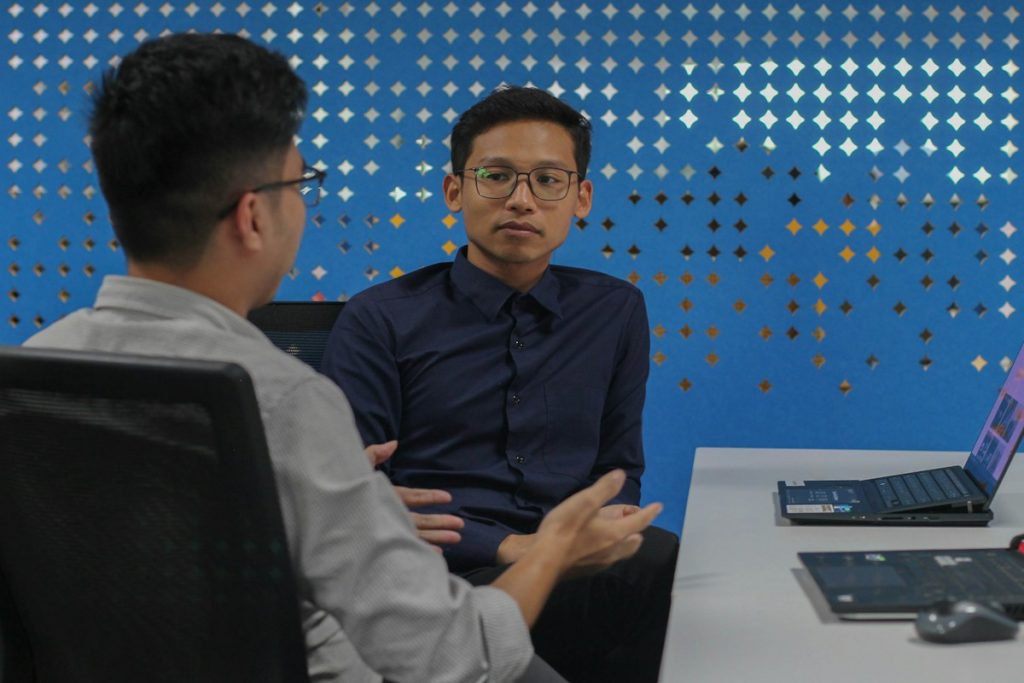
Writing a crisp business plan is only step one. The critical filter is how you defend that plan out loud. Endorsement committees regularly invite founders to pitch sessions or detailed panel reviews. This is where many technically brilliant engineers falter.
Can you explain your customer acquisition cost without glancing at your slides? Can you defend why a giant like Google or Amazon will not wipe your product out in six months? When an evaluator challenges your regulatory risk profile, do you panic or answer systematically?
Conducting an Innovator Visa Mock Interview allows you to identify speech tripwires, vague generalisations, and gaps in financial knowledge. The mock experience simulates adversarial questions:
- “Your year-two revenue projections show a 400% jump with zero marketing headcount increase. How does that work?”
- “Which specific UK patent or proprietary dataset stops a domestic competitor from copying your core service within 90 days?”
- “How will you manage your technical runway if your initial corporate pilots stall for six months?”
If you hesitate on these answers in the real interview, your likelihood of endorsement drops significantly. Practising realistic, tough questioning transforms nervous technical answers into steady commercial arguments.
Structuring the Application: From Architecture to Business Logic
Transitioning from an individual contributor or technical lead into an executive founder requires a mindset shift. When drafting documentation, the language must change from codebase mechanics to enterprise growth metrics.

To establish genuine innovation and viability, your application dossier must contain specific components:
- Detailed Market Validation: Real discovery interviews, letters of intent (LOIs), or waiting lists from prospective UK clients.
- Competitor Differentiation Matrix: A clear, honest breakdown of direct and indirect competitors, highlighting your distinct technical moat.
- Financial Projections: Three to five-year profit and loss statements, balance sheets, and cash flow forecasts that align with realistic hiring plans.
- Operational Milestones: A 24-month roadmap with quantifiable technical and commercial deliverables.
Instead of wrestling with formatting issues or wondering if your financial tabs meet Home Office expectations, running your draft through a specialised TorlyAI BP Builder APP helps stress-test every section against real criteria.
Comparison: Traditional Visas vs. The Innovator Founder Pathway
Many skilled tech professionals weigh the differences between remaining on standard employer-sponsored permits and stepping into founder status. Other countries offer entry mechanisms, such as Ireland’s interview authorisation scheme for roles on their Critical Skills list, which grant short-term permission to attend job interviews. But staying on the corporate employment route carries trade-offs when compared to the independence of the UK Innovator Founder route:
| Feature | Standard Skilled Worker Route | Innovator Founder Visa Route |
|---|---|---|
| Sponsorship | Tied to a specific licensed employer | Self-directed; you lead your own enterprise |
| Business Ownership | Highly restricted; secondary jobs limited | You own and manage your registered UK company |
| Path to Settlement | Typically 5 years to Indefinite Leave to Remain | Accelerated settlement possible in 3 years |
| Entry Barrier | Confirmed job offer from an authorised sponsor | Approved endorsement from an authorised body |
| Career Flexibility | Redundancy leaves you 60 days to find a sponsor | Complete control over your venture and product roadmap |
While employer routes provide immediate salary security, they cap your autonomy. The founder pathway offers faster permanent settlement and total control, but demands that you defend your business model successfully from day one.
Common Blunders That Trigger Endorsement Refusals
Endorsement assessors review hundreds of pitch decks each month. They can spot fluff within thirty seconds. Avoiding predictable mistakes saves you months of wasted effort and costly re-applications.
1. The Generic Aggregator Pitch
If your business is simply “Uber for dog grooming” or “an AI portal for local accountants,” assessors will reject it for lack of innovation. You must present genuine technological or systemic novelty, not standard software integration.
2. Disregarding UK Workforce Impact
Scalability is not just about server throughput; it is about local economic impact. Endorsing bodies expect to see how your venture creates skilled employment opportunities inside Britain over its first three years.
3. Vague Founder Skillsets
You must show why you are uniquely positioned to execute this business. If you are launching a complex healthtech platform but possess no medical tech background or advisory board, your profile will be deemed unviable.
Refining these details requires iterative review. Preparing through a targeted Innovator Visa Mock Interview forces you to articulate your personal founder capability clearly, ensuring your track record supports the commercial vision you present.
How to Prepare for Your Endorsement Review Step-by-Step
Navigating the application does not have to be chaotic if you break it down into clean operational sprints. Treat the visa process like an engineering project.
- Sprint 1: Ideation and Validation. Conduct market discovery. Secure formal feedback from UK-based industry contacts. Establish whether your software solves an urgent, expensive problem.
- Sprint 2: Financial and Operational Modeling. Build your headcount plans, pricing strategy, and runway calculations. Ensure you account for UK corporation tax, National Insurance contributions, and realistic professional fees.
- Sprint 3: Documentation and Assessment. Organise your supporting evidence into a cohesive pack. Use specialised reasoning tools to check for internal contradictions across your texts.
- Sprint 4: Pitch Rehearsal and Refinement. Drill your presentation repeatedly. Walk through hard questions about customer churn, data privacy compliance under UK GDPR, and distribution hurdles until your delivery is effortless.
By breaking down the preparation into concrete stages, you remove the stress and focus entirely on execution.
Take the Next Step Toward Your UK Enterprise
Transitioning from an overseas employee or local tech specialist into a fully backed UK startup founder is one of the most rewarding moves you can make. The UK startup ecosystem provides unmatched access to venture capital, talent, and global markets, but the gatekeepers require absolute proof of your venture’s potential.
Do not leave your endorsement pitch to chance. Polish your commercial narrative, verify your financial viability, and run through an Innovator Visa Mock Interview to guarantee you enter your assessment with complete clarity and confidence. The market moves fast; equip yourself with the right preparation tools and build your company in Britain today.
