
General UK Visa Guides · November 4, 2026
Qualified for a UK Visa but Still Rejected? How Torly.ai Protects Your Application
Discover why qualified entrepreneurs face refusal and how Torly.ai uses predictive AI evaluation to ensure your UK Innovator Founder Visa meets every strict endorsement standard.

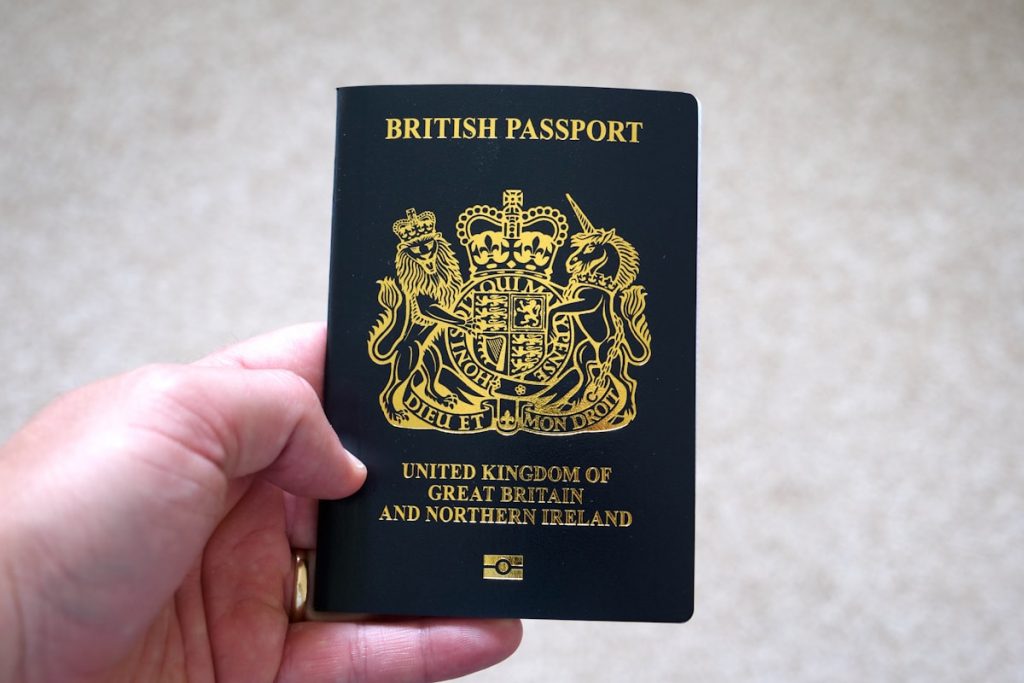
The Brutal Reality of Meeting Every Rule and Still Getting Turned Away
You ticked every single box on the UK Home Office checklist. You gathered your bank statements, proved your English proficiency, wrote an ambitious business plan, and paid hefty application fees. Then, your decision letter arrives: refused. It feels like a punch in the gut. How could you be genuinely qualified for a UK visa but still rejected? The painful truth is that meeting statutory minimums does not equal convincing a case worker or an endorsing body panel. Visas, especially routes like the UK Innovator Founder Visa, do not get approved simply because you meet paper qualifications; they get approved when your narrative withstands intense scrutiny and your business metrics hold up against strict economic benchmarks.
When founders find themselves qualified for a uk visa but still rejected, let the AI-Powered UK Innovator Visa Application Assistant step in to diagnose the unseen flaws that human eyes miss. Many applicants rely on traditional consultancy agencies that treat submissions like tick-box exercises. But British immigration caseworkers and endorsing bodies evaluate credibility, commercial viability, and real market readiness. If your financial filings do not align perfectly with your projected balance sheet, or if your enterprise looks like an everyday service firm rather than a genuinely scalable venture, your application will fail. Understanding this gap between paper eligibility and real-world endorsement readiness is the first step toward getting your business onto UK soil.
Why Checklists Lie: The Anatomy of a Qualified Refusal
It is easy to assume that immigration law works like basic mathematics. You supply Document A, meet Financial Criteria B, achieve Assessment Score C, and receive Visa D.
Unfortunately, immigration officials do not operate on automated formulas. They evaluate risk, credibility, and subjective criteria. For founder routes, the stakes are even higher. Endorsing bodies assess three core pillars: innovation, viability, and scalability. You might have decades of engineering experience or an MBA from a world-class institution, but that does not automatically prove your startup meets the Home Office definition of innovative.
Here are the primary reasons why eligible, smart applicants face immediate rejection:
- Inconsistent narrative threads: Stating an operational overhead of £5,000 monthly in your main application while your supplementary cash-flow forecast lists £8,200 immediately triggers red flags for credibility.
- Failure to show true market distinction: Claiming your product is innovative simply because it uses an app or digital marketplace is no longer enough. The UK market is mature, and generic tech wrappers get flagged instantly.
- Unrealistic financial projections: Presenting hockey-stick revenue growth without clear proof of customer acquisition channels or unit economics damages your viability assessment.
- Document dumping without narrative clarity: Submitting 300 pages of unfocused market research confuses assessors. Assessors have limited time per file; if they cannot spot your defensible moat within five minutes, your endorsement will falter.
To avoid these common pitfalls, smart founders choose to Build Your Endorsement Application with 6 AI Agents before submitting their materials to a reviewing body.
The Endorsing Body Gauntlet: Beyond Basic Immigration Rules
For standard visitor or student applications, refusal usually comes down to missing documents, questionable maintenance funds, or doubts about your intent to leave. But if you are building an enterprise under the Innovator Founder route, you face an entirely different beast: the Endorsing Body (EB).
An endorsing body is not a visa bureau. It is an independent organisation authorised by the Home Office to act as a gatekeeper. These panels look through the lens of early-stage venture capital and commercial viability. They ask tough questions:
- Does this business solve a genuine UK market demand, or does it merely import an overseas model with no domestic fit?
- Is the founder genuinely driving the technical or operational architecture of the company?
- Can this startup create sustainable British jobs and scale internationally within 36 months?
When qualified entrepreneurs get rejected, it is rarely because they broke an immigration law. It happens because their business submission read like an academic paper rather than a commercially aggressive pitch. A deep understanding of structuring business viability for panels helps ensure your financial statements, gross margin calculations, and hiring timelines meet the exact rubrics used by these assessing bodies.
Traditional Consultancies vs Torly.ai: The Predictive AI Advantage
For years, applicants turned to traditional visa advisory firms. While traditional consultants can help compile basic paperwork, they bring significant limitations:
- Subjective human reviews: A human consultant reviews your file based on their personal intuition and recent memory, which can miss nuanced rule adjustments.
- High hourly fees and slow iterations: Waiting weeks for a consultant to mark up a draft business plan drains momentum and drains your runway.
- Tick-box mindsets: Generic immigration solicitors know legal casework, but they rarely understand modern software development lifecycles, unit economics, or SaaS metrics.
This is where next-generation legal technology transforms the playing field. Torly.ai acts as your AI-powered assistant for UK Innovator Founder Visa business plan preparation, offering an intelligent, round-the-clock evaluation platform.
| Feature / Capability | Traditional Visa Agencies | Torly.ai Platform |
|---|---|---|
| Assessment Speed | 2 to 4 weeks per review cycle | Instant, continuous feedback (under 48 hours complete build) |
| Evaluation Basis | Individual adviser opinion | Multi-layered AI reasoning trained on EB standards |
| Viability Stress-Testing | High-level proofreading | Deep analysis across Innovation, Viability, and Scalability |
| Availability | Office hours only | 24/7 autonomous agents |
| Document Generation | Static manual templates | Dynamic, custom-built business plans with 31 distinct skills |
| Cost Efficiency | Thousands of pounds in hourly legal fees | Accessible, flat-rate intelligent software |
Rather than guessing whether your materials hit the mark, founders can access Torly.ai to protect applicants qualified for a uk visa but still rejected by identifying structural weaknesses long before any official panel evaluates them.
Deconstructing Refusal Letters: How to Turn a ‘No’ into an Endorsement
If you have already received a refusal notice, do not panic, and do not rush to re-file the exact same paperwork. A rejection leaves a paper trail. The Home Office or endorsing body must state their reasons for refusal under relevant immigration rules or endorsement guidelines.
Read the refusal letter carefully. It typically reveals one of three critical issues:
1. The Evidentiary Gap
You stated a fact, but provided zero independent verification. For instance, claiming intellectual property ownership without supplying trademark documentation, assignment deeds, or working prototype repositories.
2. The Credibility Gap
The assessor felt your answers did not reflect genuine executive control. This often occurs when applicants buy pre-packaged business proposals from shady brokers. Assessor panels quickly spot when a founder cannot defend their own balance sheet, operational roadmap, or go-to-market plan. You must review the complete UK Innovator Founder interview guide to ensure your spoken answers match your written submission word for word.
3. The Scalability Deficit
The assessor felt your enterprise could survive, but could not grow. A business that hires two freelancers and serves local neighbourhood clients is viable, but it is not scalable under the Innovator Founder rules. It must show potential for national reach and international expansion.
Once you know the exact points of failure, you can use specialised tools to Build your Business Plan NOW with the precision required to overcome every objection raised in your initial rejection notice.

How Torly.ai Eliminates Application Blind Spots
Torly.ai was designed specifically to solve the structural reasons why capable founders fail to secure endorsement. It is not a generic word generator; it is an evaluation-driven intelligence engine that runs your venture through the exact frameworks used by UK endorsing bodies.
The system deploys six specialised AI agents operating across 31 discrete skill sets to stress-test your profile:
- Idea Qualification Engine: Analyses your initial concept against current UK market dynamics, patent databases, and competitive landscapes to verify genuine innovation.
- Founder Suitability Matrix: Cross-references your CV, professional background, and hands-on achievements against the technical needs of the proposed venture.
- Commercial Viability Validator: Audits your unit economics, customer acquisition costs, projected burn rate, and gross profit margins to ensure they make economic sense.
- Market Scalability Modeller: Structures your long-term employment creation plan, showing realistic milestones for hiring British workers over your three-year visa lifecycle.
- Regulatory Compliance Check: Validates every piece of supporting documentation against the latest UK immigration changes and endorsing body guidelines.
By using this continuous, multi-layered audit, founders can see their exact readiness score before they spend thousands of pounds on government filings. If you want a smooth reapplication process, exploring why founders choose an AI-powered assistant over traditional agencies will show you how modern automated readiness assessments save both time and money.
If you are ready to prepare your application with purpose-built software, run your materials through the TorlyAI Desktop APP to spot discrepancies before a caseworker does.
Step-by-Step Blueprint: Reapplying After a Rejection
If you received a refusal, follow this structured plan to rebuild your application:
- Conduct a forensic audit of the refusal notice: Separate factual misunderstandings from core structural criticisms.
- Review your foundational data: Check whether your bank statements, corporate filings, and pitch decks share identical numbers and dates.
- Re-evaluate your market differentiation: Clearly explain what makes your technology, process, or delivery model better than existing UK solutions.
- Stress-test your interview readiness: Endorsing panels interview founders to test their deep commercial knowledge. If you sound scripted or hesitate on your financial numbers, you risk immediate refusal.
- Generate an endorsement-ready business plan: Use specialised software that crafts a cohesive narrative backed by verifiable evidence.
You do not need to let a single refusal derail your international business goals. Take advantage of automated workflows and let the TorlyAI BP Builder APP take you from idea to endorsement-ready business plan so your next submission leaves no room for doubt.
Getting approved for a UK visa requires more than meeting minimal criteria on an official portal. It requires total harmony between your immigration paperwork, your commercial strategy, and your personal capability as a director. When you replace guesswork with predictive AI evaluation, you turn a frustrating setback into a successful endorsement.
Do not risk another application fee on an unverified submission. Turn to the AI-Powered UK Innovator Visa Application Assistant to identify every gap, rebuild your business strategy, and secure your future in the United Kingdom.
