
Student Visa Guidance · November 12, 2026
Switching from Student Visa to Innovator Founder: Torly.ai Complete Route Map
Unlock your entrepreneurial journey from UK international student to business founder with Torly.ai, providing autonomous gap analysis and endorsement-ready business plan creation.

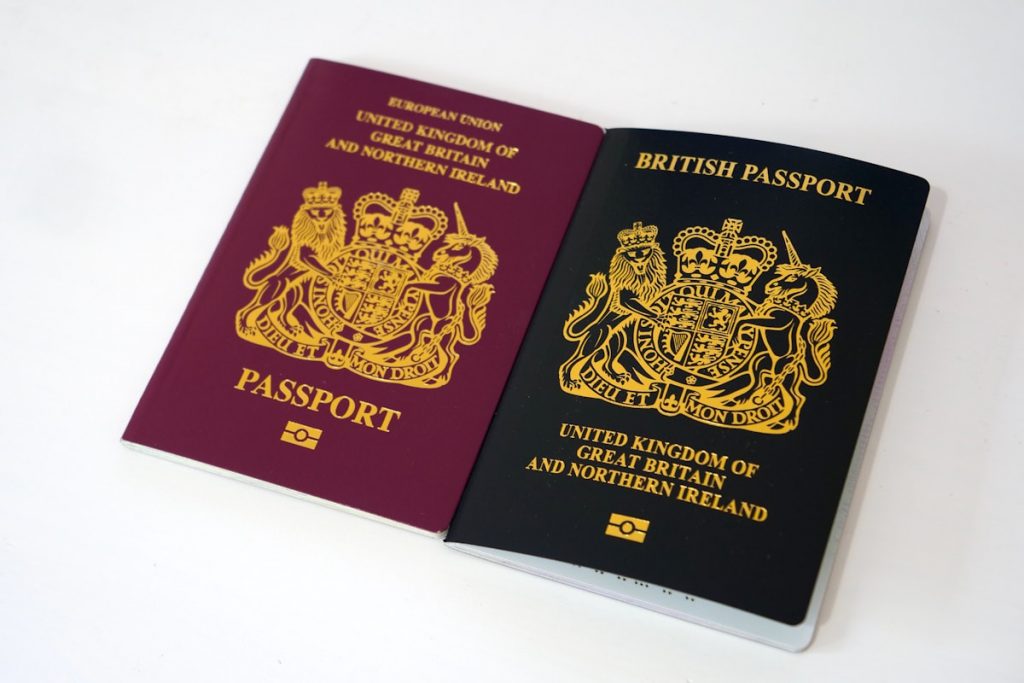
From Campus Lecture Theatres to Boardrooms: The Founder Transition
Transitioning from a UK university course straight into leading your own venture is one of the most exciting paths an international graduate can take. Yet, moving between these legal routes requires meticulous preparation. Navigating the rules set out by the Home Office while respecting the strict restrictions on your current Student visa calls for dependable Immigration Consultancy Services UK to guarantee you remain compliant every step of the way. Rather than defaulting to the Graduate route, ambitious students now look directly at the Innovator Founder visa because it offers a direct, three-year pathway to Indefinite Leave to Remain (ILR).
The journey demands that you balance academic completion with genuine business innovation. While holding Student permission, you cannot simply launch a limited company, invoice clients, or start trading. Doing so breaches your work conditions and could destroy your immigration record. Instead, you need a smart, structured route map that helps you refine your business concept, undergo gap analysis, and secure an official endorsement before switching your status inside the UK. In this complete guide, we demystify the legal boundaries, break down endorsing body requirements, and show you how autonomous AI guidance transforms raw concepts into endorsement-ready businesses.
The Student Visa Boundary: What You Can and Cannot Do
Let us address the elephant in the lecture hall: you cannot trade while on a Student visa.
Under Appendix Student of the UK Immigration Rules, international students with work permissions are typically restricted to 20 hours per week during term time. More crucially, the rules state an absolute prohibition on self-employment and engaging in business activity.
What counts as business activity? The Home Office caseworker guidance interprets this broadly. You are engaging in business activity if you:
- Work for a business where you hold a financial interest of more than 10% (such as shares).
- Act as a director or hold a statutory position in an incorporated entity.
- Work in a capacity where you manage your own workload, fees, and client delivery (like freelancing, consulting, or gig-economy driving).
- Sell goods or services systematically online with a view to making a profit.
Even monetising a personal YouTube channel, streaming on Twitch, or setting up a Shopify store counts as trading in the eyes of HMRC and UK Visas and Immigration (UKVI). If you breach these conditions, you risk curtailment of your current leave and a possible re-entry ban.
Does this mean you cannot plan your startup? Not at all.
You are completely free to conduct pure market research, draft business proposals, write code, run academic laboratory experiments, and build pitch decks. You can speak to prospective co-founders and identify potential suppliers. The critical boundary is economic activity: you cannot accept commercial payments, take equity, or trade goods or services. To maintain your integrity, you must know how to prepare your proposal without crossing this line. If you want to check your readiness against these strict rules, reviewing mastering UK Innovator Founder visa criteria: the complete guide by Torly.ai will give you a clear baseline before you begin drafting documents.
Demystifying the UK Innovator Founder Route
The Innovator Founder visa replaced the older Tier 1 (Start-up) and traditional Innovator routes, merging them into a single, high-calibre pathway. The £50,000 investment requirement was dropped, putting the focus entirely on the entrepreneur and their business plan.
To qualify, your startup must satisfy three core criteria verified by an approved endorsing body:
- Innovation: You must have a genuine, original business plan that meets new or existing market needs and creates a competitive advantage. It cannot simply replicate an existing business model (for example, opening an ordinary marketing consultancy or a convenience store will not work).
- Viability: You need realistic commercial goals, a grounded financial projection, and evidence that you possess the skills, knowledge, and experience to run the company.
- Scalability: Your business model must show potential for sustained job creation and growth into national, and ultimately international, markets.
Unlike the Graduate visa, which is a temporary two-year unsponsored stay without settlement benefits, the Innovator Founder route leads to permanent residency (ILR) in as little as 36 months if you hit defined milestones. For ambitious students, this is the premier route to setting down roots in the British tech and business ecosystems.
Before presenting your concept to an endorsing body, you can deploy the TorlyAI Desktop APP to run autonomous gap analysis across your idea, spotting weak spots before professional reviewers ever see them.
The Complete Route Map: Student to Innovator Founder
Switching inside the UK is entirely permitted under the Immigration Rules, provided your Student visa is still valid and you meet specific timing criteria. Here is the step-by-step roadmap to make it happen smoothly:
Step 1: Confirm Course Completion Status
You must have completed, or be about to complete, your degree. If you are studying for a degree-level qualification or above with a Student sponsor that is a Higher Education Provider with a track record of compliance, you can apply to switch in-country once your course finish date arrives, or if your application is accompanied by official confirmation that you have completed your course.
Step 2: Formulate an Uncontested Innovative Concept
You must translate academic knowledge or unique market observations into a commercially viable proposition. If your dissertation or research produced intellectual property, check your university’s policies regarding student IP ownership to ensure you have clear title to use it commercially.
Step 3: Conduct Structured Gap Identification
Endorsing bodies reject applications that lack rigorous market context. You must scrutinise your founder profile, technical stack, operational risk, and financial assumptions. Discovering why applications hit hurdles is essential, which is why top reasons Innovator Founder visas are refused and how AI-powered UK Innovator Visa Application Assistant protects you provides vital context for spotting weaknesses early.
To streamline this process and build documentation that aligns with endorsing body expectations, many students use a comprehensive AI-Powered UK Innovator Visa Application Assistant to check that every regulatory metric is addressed systematically.
Step 4: Secure the Endorsement
Currently, the Home Office has designated specific official endorsing bodies (including Envestors, UK Endorsement Services, Innovator International, and The Global Entrepreneurs Programme for specific schemes). You must submit a comprehensive business plan, pitch deck, and evidence portfolio to them. If invited, you will undergo a rigorous interview.
If you want to prepare your documentation with 6 specialised agents handling 31 separate visa skills, you can use the TorlyAI BP Builder APP to accelerate your draft submissions and ensure compliance with official criteria.
Step 5: Submit Your In-Country Application to the Home Office
Once the endorsing body awards you an official endorsement letter, you have three months to submit your formal application to the Home Office. You will pay the application fee, the Immigration Health Surcharge (IHS), register your biometrics, and prove you have at least £1,270 in personal savings held consecutively for 28 days (unless your endorsing body provides maintenance support).
Why Traditional Immigration Consultancy Falls Short for Student Founders
International students often visit high-street legal practitioners for advice on staying in the UK. However, switching into the Innovator Founder category presents a unique hurdle that traditional firms are rarely equipped to solve.
Solicitors understand immigration law, points systems, and document compliance. But endorsing bodies do not evaluate you on legal paperwork alone; they evaluate you on business viability. They inspect unit economics, customer acquisition costs, total addressable markets, and defensible IP. A legal adviser cannot tell you if your financial model is statistically resilient or if your software architecture lacks scalability.
Conversely, commercial startup incubators understand business strategy, but they often fail to grasp the nuanced traps of UKVI work conditions and caseworker guidance.
This is where advanced legal-tech platforms bridge the gap. By combining deep business diagnostics with real-time immigration criteria, you get the strategic feedback required to satisfy tough commercial assessors. To understand how automated evaluation compares to old-fashioned advisory methods, explore why choose AI-Powered UK Innovator Visa Application Assistant over traditional advisory services.
You do not need to spend thousands of pounds on disparate advisers when you can Build your Business Plan NOW using intelligent systems that address both commercial scaling and immigration compliance simultaneously.
Practical Checklist: Preparing Your Switch Without Violating Conditions
To ensure you stay on the right side of UKVI regulations while assembling an exceptional application, stick to this practical checklist:
- Keep clear academic separation: Finish your coursework and dissertations first. Do not allow your enterprise research to compromise your university attendance or grades, as your university sponsor can withdraw visa support.
- Never accept freelance payments: If you create a software prototype, do not charge early users while on your Student visa. Set up free alpha testing groups instead.
- Avoid Companies House registrations: Do not incorporate your limited company or appoint yourself as a director before obtaining your endorsement and submitting your visa application. You can incorporate immediately after your Innovator Founder visa is granted.
- Maintain the 28-day financial buffer: Keep your maintenance funds (at least £1,270) in a regulated bank account untouched for 28 consecutive days. A sudden dip of a single pound resets the clock.
- Keep detailed logs of validation work: Record your market research, consumer surveys, and technical development notes. Endorsing bodies appreciate verifiable proof that the applicant is the driving force behind the business idea.
By navigating these restrictions intelligently, you protect your immigration record and construct a defensible commercial project.
Take the Next Step Toward Your UK Startup Journey
Moving from a UK Student visa to an Innovator Founder visa allows you to transform your academic success into a lasting business in one of the world’s most dynamic commercial hubs. It lets you skip the temporary stopgap of the Graduate visa and puts you directly on a path toward permanent settlement.
Do not leave your submission to guesswork or unverified advice. Whether you are validating your business concept against Home Office standards or drafting a comprehensive submission for an endorsing body, using the right technology makes all the difference. Get professional support and explore world-class Immigration Consultancy Services UK to begin your founder journey with total confidence today.
