
How To Guides · January 7, 2026
UK Innovator Visa AI: How Smart Tools Maximise Endorsement Success
Discover how UK Innovator Visa AI tools validate business plans, test British market fit, and ensure seamless Home Office compliance for global founders.

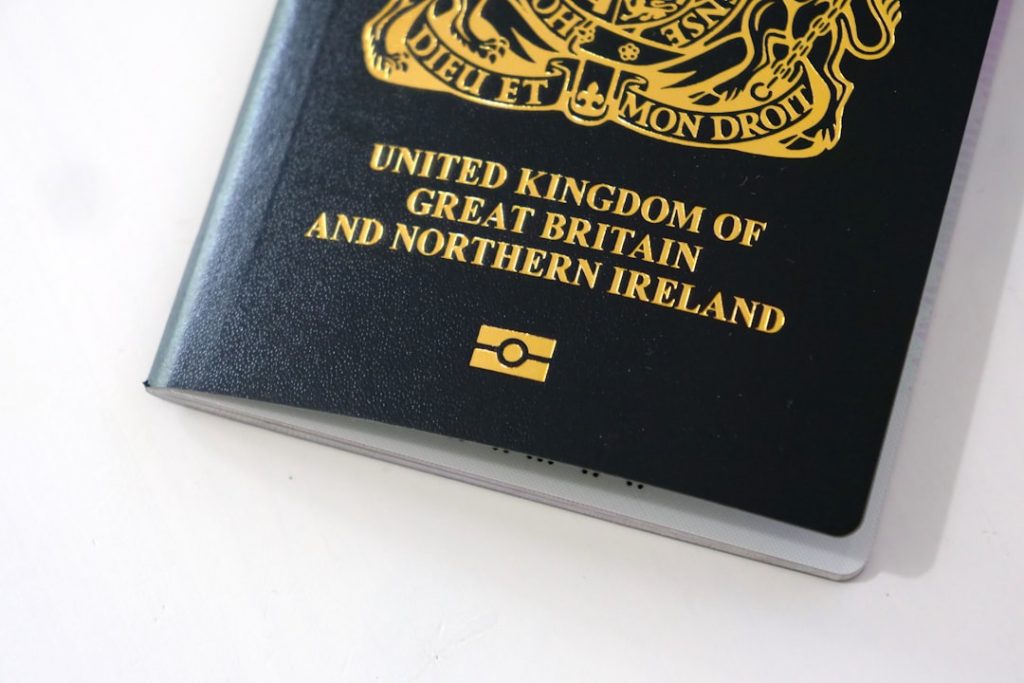
UK Innovator Visa AI technology evaluates business plans, founder capabilities, and Home Office compliance criteria before an application reaches an endorsing body. By running structured simulations across innovation, viability, and scalability benchmarks, an AI-powered system identifies compliance gaps and verifies whether a commercial venture qualifies under strict UK immigration rules.
Applying for the UK Innovator Founder route used to feel like throwing a paper aeroplane through a storm. You spent six months drafting a 50-page document, crossed your fingers, and hoped an endorsing body officer had a nice lunch before reading it. Today, modern applicants run their documents through dedicated artificial intelligence platforms before submitting a single page. If you want to benchmark your strategy right now, try an AI-Powered UK Innovator Visa Application Assistant to test your readiness.
The Reality of Preparing an Endorsement-Ready Venture
Most founders get stuck on one major roadblock: understanding what UK endorsing bodies actually look for. Immigration solicitors understand case law, but they rarely code, calculate customer acquisition costs, or evaluate software architecture. On the other hand, startup accelerators understand venture growth, yet they often trip over Home Office immigration rules. This gap leaves applicants caught in the middle, rewriting business documents dozens of times without clarity.
Navigating this process requires continuous, automated checks against the three core Home Office criteria: innovation, viability, and scalability. Smart founders rely on targeted tools to remove emotional bias and assess technical execution. Using specialised TorlyAI Desktop APP software allows applicants to stress-test their ideas locally, pinpointing logical inconsistencies in revenue assumptions, marketing strategies, and operational timelines before human assessors ever see them.
What Does UK Innovator Visa AI Actually Do?
Many people think of AI as a basic chatbot that regurgitates generic bullet points. That will not work for an endorsement application. A genuine UK Innovator Visa AI system acts as a multi-layered evaluation engine. It reviews your technical proposition against existing market solutions, checks your financial models against UK inflation patterns, and highlights structural weaknesses in your narrative.
Let us break down the exact mechanisms an AI evaluator uses:
- Semantic Market Analysis: Checks whether your solution genuinely introduces a novel product or service to the UK market, rather than repackaging an existing offering.
- Cross-Document Reconciliation: Ensures your 3-year profit and loss statement matches your sales funnel, headcount projections, and product roadmap.
- Home Office Compliance Checks: Scans your operational timeline to prove that you are an active, founding member leading the business daily, avoiding passive investment pitfalls.
- Regulatory Flagging: Identifies sectors requiring special UK permissions, such as the Financial Conduct Authority (FCA) or data protection requirements.
Instead of paying thousands of pounds for early review consultations that only check punctuation, an algorithmic audit identifies structural vulnerabilities in minutes.
How Do You Prove Trading and Active Founder Engagement?
One of the most misunderstood aspects of the route is the concept of trading. The Home Office does not require hundreds of thousands of pounds in initial revenue. Instead, officers and endorsing bodies look for genuine commercial traction and active leadership.
What counts as active trading before full operational launch?
- Prototype Development and User Validation: Demonstrating functional MVPs, alpha testing feedback, or user waitlists.
- Commercial Partnerships: Formal letters of intent, pilot agreements, or supplier negotiations with UK-based organisations.
- Capital Deployment: Clear records showing funds committed to research, tooling, testing, or specialised recruitment.
- Market Presence: Structured brand assets, beta trials, and customer outreach campaigns.
A common mistake is assuming that incorporating a company at Companies House proves commercial activity. A registration number proves nothing on its own. The endorsing body requires documentary evidence showing that the business is dynamic, founder-led, and operating as an active venture.
The 4F Framework: How Algorithms Score Endorsement Probability
Top AI assessment systems do not just flag spelling errors; they score your submission across a validated matrix. The most robust model is the Innovatorly Matrix (4F Framework), which evaluates an applicant across four weighted dimensions.
Let us examine how this formula works:
Endorsement Success = Product-Market Fit x Founder-Market Fit x British Market Fit + Fortune
1. Product-Market Fit (30% Weight)
Does the UK market actually need what you are building? Evaluators want proof that customers will pay for your solution. An AI analysis checks your value proposition against established competitors to verify genuine differentiation. If your market size projections rely on arbitrary numbers, the system flags the calculation immediately.
2. Founder-Market Fit (25% Weight)
Are you the right person to build this? The endorsing body needs to see that your technical background, domain experience, and managerial history equip you to execute the plan. When you run your profile through an AI background check, the algorithm correlates your CV achievements with the specific operational milestones stated in your business plan.
3. British Market Fit (25% Weight)
Why the United Kingdom? Setting up in London, Manchester, or Edinburgh must be commercially sensible for your specific business. The system checks whether your venture creates skilled employment for settled workers, benefits regional tech clusters, and complies with British corporate standards.
4. Fortune (20% Weight)
Fortune represents timing, regulatory momentum, and selecting the right endorsing body. Some endorsing bodies prioritise green technology, while others lean towards enterprise software, life sciences, or creative tech. Aligning your application with an endorsing body that actively backs your specific vertical improves your chances significantly.
How to Build an Endorsement Business Plan with AI Agents
Drafting an endorsement-grade business plan requires balancing commercial viability with regulatory precision. Rushing through a generic template will result in an immediate rejection. Instead, modern founders use multi-agent workflows where separate agents tackle distinct elements of the application package.
You can orchestrate this workflow using dedicated local applications. For example, you can Build your Business Plan NOW using specialised desktop agents to manage the heavy lifting.
Here is how an agentic pipeline works in practice:
- The Market Research Agent: Gathers verifiable data on UK market volume, competitor pricing, customer profiles, and macroeconomic trends.
- The Financial Modeling Tool: Builds dynamic Excel spreadsheets covering 3-year cash flow, balance sheets, and R&D expenditure scenarios, avoiding broken cell formulas.
- The Compliance Validation Feature: Scans the draft against current Home Office guidance, verifying minimum contact points, full-time founder commitments, and IP ownership rules.
- The Interview Preparation Agent: Generates simulated interview transcripts, asking tough questions about unit economics, risk mitigation, and scaling challenges.
Comparing Manual Application Preparation Against AI-Assisted Workflows
Why are founders moving away from purely manual document drafting? Look at the practical differences across key preparation stages.
| Preparation Stage | Traditional Manual Approach | AI-Assisted Assessment Workflow |
|---|---|---|
| Eligibility Verification | Days spent reading dense Home Office PDF guidance | Instant algorithmic check against live endorsing criteria |
| Market Viability Analysis | Manual Google searches yielding outdated industry figures | Structured semantic search highlighting verified industry data |
| Financial Forecasting | Static templates with frequent formula disconnects | Stress-tested dynamic models tailored to R&D expenditure |
| Gap Detection | Subjective feedback from personal networks | Algorithmic scoring identifying missing documentary evidence |
| Preparation Speed | Typically 3 to 6 months of disconnected work | 2 to 4 weeks using structured multi-agent coordination |
The advantage is not just speed; it is consistency. When multiple AI agents cross-check your data, discrepancies between your operational milestones and cash flow forecasts get resolved before submission.
Avoiding the Common Pitfalls of Founder Visa Applications
Many applicants fail not because their idea is poor, but because their execution fails technical compliance checks. Here are the most frequent mistakes that AI tools help uncover:
1. The Generic Technology Trap
Claiming you are an innovative business simply because you run an online marketplace or use public APIs will not work. Endorsing bodies look for proprietary intellectual property, bespoke processes, or unique technical architectures. An AI evaluation compares your proposition against existing solutions, warning you if your concept appears derivative.
2. Flawed Financial Projections
Predicting millions in profit by month six without factoring in customer acquisition costs, staff pension contributions, or VAT obligations instantly destroys credibility. AI financial models ensure that your cash burn matches your operational hiring plan.
3. Ambiguous Founder Roles
If an application reads as though an external consultancy will run the day-to-day operations, the endorsing body will reject it. The applicant must demonstrate full-time, hands-on leadership. AI review tools highlight passive voice or vague operational descriptions, prompting you to specify your personal duties, key decision-making powers, and daily oversight.
4. Ignoring Regional Economic Impact
The UK Home Office looks favourably on businesses that stimulate economic growth beyond central London. AI tools can help identify regional clusters, supply chain hubs, and university partnerships across the country, showing assessors that your business plan considers the wider UK economy.
Practical Steps to Validate Your Submission Package
If you are preparing to submit your application, follow this systematic preparation process:
- Run an Instant Eligibility Check: Confirm that your core proposition satisfies the definition of an innovative, viable, and scalable business before writing detailed documentation.
- Audit Your Track Record: Match your background, educational qualifications, and commercial achievements to your business plan milestones.
- Build a Modular Business Plan: Structure your document into logical sections, covering market opportunity, product roadmap, competitor analysis, marketing strategy, and financial models.
- Perform Multi-Agent Compliance Scans: Use the Compliance Validation Feature to search for contradictory statements, regulatory oversights, and unverified data claims.
- Conduct Rigorous Mock Interviews: Practice defending your pricing strategy, hiring roadmap, and risk management framework under pressure.
Preparing an application requires disciplined effort. By leveraging modern evaluation tools, you remove the guesswork and build a submission grounded in verified market facts and regulatory compliance. Take advantage of modern software and discover how our platform takes you from idea to endorsement-ready business plan. 6 specialised agents. 31 skills. to put your venture on the strongest path to UK success.
Frequently Asked Questions
What is the UK Innovator Founder Visa?
Source: UK Home Office
How much does the UK Innovator Founder Visa cost?
- Visa application fee: £1,191
- Immigration Health Surcharge: £3,105 (3 years)
- Minimum business investment: £50,000
- Endorsement body fee: £500 - £1,500
- English language test: £150 - £200
Source: UK Home Office
How long does the UK Innovator Founder Visa application take?
- Stage 1 (Endorsement): 6-8 weeks
- Stage 2 (Visa Application): 12-16 weeks
What are the key requirements for UK Innovator Founder Visa?
- At least 18 years old
- Innovative business idea new to UK market
- £50,000 minimum investment
- Endorsement from approved body
- English language (B2 level)
- Sufficient personal savings (£1,270+)
- Business experience or relevant skills
Which endorsing bodies are authorized for UK Innovator Founder Visa?
- UK Endorsing Services (UKES) - General innovative businesses across all sectors
- Innovator International - Scalable, globally-focused businesses with international expansion plans
- Envestors Limited - Investment-ready businesses seeking equity funding
- The Global Entrepreneurs Programme (GEP) - Government-backed programme for tech entrepreneurs (invitation-only)
Note: Many previously authorized endorsing bodies (including Tech Nation, Innovate UK, universities, and accelerators) are now legacy organizations that only maintain existing endorsees and do not accept new applications.
TorlyAI recommends the best fit based on your industry and business stage.Need personalized guidance for your UK Innovator Founder Visa application?
Start Free Assessment