
Case Studies · November 7, 2026
Why 65% of Endorsements Fail: Torly.ai Case Studies and How to Succeed
Discover why many applicants face rejection and how Torly.ai helps founders avoid costly mistakes with automated 4F readiness assessments.

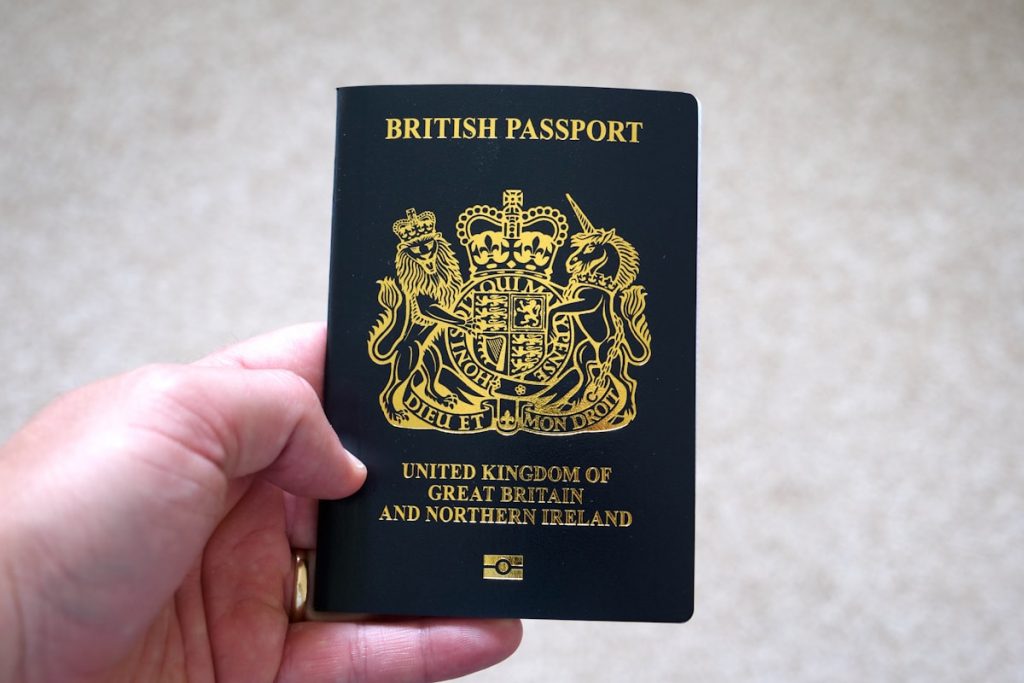
The Brutal Reality Behind UK Innovator Founder Endorsement Rejections
Getting a UK Innovator Founder Visa should feel like an exciting milestone, yet nearly two-thirds of all applicants get knocked back before they ever reach the Home Office. Why? Because founders routinely confuse having a pretty 60-page PDF document with actual business readiness. Between steep legal retainer costs and slick sales pitches, countless talented entrepreneurs throw tens of thousands of pounds down the drain. They assume that paying a high-street consultant to draft generic market statistics guarantees a seat at the table. In reality, the official endorsing bodies do not care about bound presentation folders; they care about deep validation, viable unit economics, and proven founder capability within the British market ecosystem.
When you rely on an outdated UK Innovator Visa Agency to push template documentation, you walk directly into the firing line of rigorous assessing panels. The assessing bodies have shifted heavily away from passive reviews toward intense, forensic interviews designed to expose candidates who did not build their own plans. If you cannot explain your customer acquisition channels, regulatory hurdles, and unit margins without glancing down at consultant notes, an instant rejection letter follows. Learning how to navigate this ecosystem demands an honest, data-driven look at why founders fail, what endorsing bodies actually want, and how next-generation AI platforms ensure you are fully prepared before spending a single pound on formal submissions.
The False Promise of the Traditional Visa Agency
For years, the pathway to obtaining a UK business visa seemed straightforward on paper: hire an agency, pay a hefty retainer, let them write a business plan, and wait for your endorsement letter.
Except it almost never works that way anymore.
Most traditional consultancies operate on an agency billing model. Their core incentive is billing you for document drafting, legal reviews, and re-submissions. When your application gets turned down, their solution is almost always the same: “That panel was unusually strict. Pay us an extra £2,000, and we will update the deck for another endorsing body.”
The reality is stark:
* Endorsing bodies are heavily scrutinised by the UK Home Office.
* Assessors look for authentic founder expertise, not polished ghost-written prose.
* Relying on third parties creates a dangerous knowledge deficit during panels.
When an assessing officer asks why you chose an enterprise sales cycle over self-serve SaaS, reciting a consultant’s canned answer immediately flags you as an unprepared candidate. To see how these gaps emerge under pressure, review our deep dive on defending your business model against intense scrutiny.
Case Study 1: The Costly Trap of Outsourced Thinking
Consider the composite experience of an experienced health-tech founder named Priya. Having run a successful digital healthcare consultancy in Mumbai for six years, she decided to expand into the United Kingdom with an AI-driven triage platform designed for NHS practices.
She had the domain expertise, a relevant postgraduate degree, and substantial capital. Then she made the most common mistake in this journey: hiring an agency that promised an effortless route through direct document submission.
During her interview with the endorsing panel, the conversation quickly unraveled.
When the panel asked: “How does your triage algorithm specifically integrate with EMIS Health and SystmOne clinical systems compared to existing suppliers?” Priya froze.
Her agency had inserted broad market research showing billions in NHS software spend, but zero technical workflow data. Worse, when asked how many practice managers she had spoken with in the UK, the answer was zero. Her agency told her customer discovery was unnecessary until after the visa arrived.
The panel saw an outsourced, theoretical business plan with no genuine commercial traction.
The Second Attempt: Doubling Down on the Wrong Solution
Convinced by her advisors that the first endorsing body was simply unreasonable, Priya paid another £1,500 for a plan revision and applied elsewhere.
The second interview uncovered identical flaws:
1. She claimed unit economics she could not explain on a whiteboard.
2. Her competitor research completely ignored direct local alternatives.
3. Her customer validation consisted of three unanswered LinkedIn messages to London GPs.
Result? Another swift rejection. She had now lost over £14,000 and eight months of time, all while believing she was following an expert pathway.
You cannot outsource your core strategic thinking to a third party. If you need to map out your commercial foundations from scratch, you can Build your Business Plan NOW using intelligent AI frameworks that force you to confront every operational blind spot yourself.
Case Study 2: The High-Performing Founder Who Refused to Validate
Our second composite case illustrates an even more painful scenario: a founder with massive existing business success who assumed international prestige alone would carry the day.
Bayo, a 29-year-old tech entrepreneur from Lagos, had built an e-commerce marketing agency generating $450,000 in annual revenue with a staff of twelve. He wanted to expand to London with a dedicated conversion optimisation tool for diaspora retailers.
He hired what he believed was a premier immigration firm, spending £4,500 on legal management, £5,000 on business plan writing, and £2,500 on local market research.
What went wrong?
- Lack of True Innovation: His agency framed standard conversion funnels as “proprietary AI.” When the technical assessor probed the model architecture, Bayo could not explain it because his overseas team had not built it yet.
- Confused Entity Strategy: The application read like a subsidiary branch office for his Nigerian firm rather than a scalable, high-growth UK entity creating local employment.
- Absence of British Market Validation: His agency included theoretical market sizing, but Bayo had not secured a single letter of intent or spoken to any independent UK retailers.
Crushed by the rejection, Bayo assumed the system was rigged against international entrepreneurs and walked away entirely. In reality, he had simply been handed a generic document package that failed every single Home Office benchmark for innovation, viability, and scalability.
To prevent this kind of misstep, you need an objective platform that evaluates your commercial claims against Home Office standards before submission. That is why using an evaluation-driven system like our AI-Powered UK Innovator Visa Application Assistant provides the diagnostic clarity traditional advisors routinely skip.
Deconstructing the 4F Framework: Why Panels Reject 65% of Applicants
Endorsing bodies review thousands of applications every year. Because they face strict regulatory oversight from the Home Office, their assessors actively look for reasons to disqualify weak proposals early.
They evaluate your profile across what we define as the 4F Endorsement Matrix:
| Assessment Pillar | What Founders Submit | What Assessors Demand | Typical Failure Point |
|---|---|---|---|
| Founder Capability | Impressive CVs from home countries | Proven adaptability to the UK market | Inability to answer live commercial questions |
| Functional Innovation | Broad buzzwords (“AI platform”, “Machine Learning”) | Documented technical differentiation | Copycat software with standard wrappers |
| Financial Viability | Five-year revenue spreadsheets showing millions | Grounded unit economics and early pilot proof | Imaginary customer acquisition costs |
| Future Scalability | Unrealistic global headcount plans | Realistic, sustainable UK job creation | Relying entirely on offshore developer teams |
To understand how endorsing officers evaluate viability during live questioning, review our guide on structuring business viability for panels.
How Priya Turned Her Application Around
After burning £14,000 on advisory services, Priya stepped back. She stopped treating her application as a paperwork exercise and treated it as an authentic startup launch.
Over nine months of intensive preparation, she shifted her approach completely:
* She personally booked calls with 23 UK GP practices to understand workflow bottlenecks.
* She identified that existing tools failed to integrate with legacy NHS software systems.
* She created a functional minimum viable product and launched a low-cost pilot with two practices.
* She secured £300 in monthly recurring pilot revenue alongside three signed letters of intent.
When she sat down for her third interview, her answers were immediate, confident, and grounded in direct operational experience.
When asked about competitors, she did not quote agency statistics; she explained exactly why practice managers disliked alternative interfaces based on her own user testing. The assessor issued her endorsement within two weeks.
Her success did not come from an expensive agency retainer. It came from genuine readiness, personal market immersion, and bulletproof validation.
If you are currently assembling your core documentation, you do not need an overpriced agency team. You can deploy our specialised TorlyAI BP Builder APP to align your operational roadmap directly with endorsing body requirements.
The Strategic Difference: Traditional Agency vs Torly.ai
Entrepreneurs looking to enter the UK startup market often find themselves torn between traditional legal consultants and modern AI-driven platforms. Understanding how the two models compare is crucial for protecting your budget and your visa timeline:
- Traditional Consultancies:
- Cost: £5,000 to £15,000+
- Feedback loops: Weeks of waiting for manual document reviews
- Focus: Cosmetic formatting and high-level market summaries
- Risk: Founders remain unprepared for intense technical interviews
- Torly.ai:
- Cost: Transparent, accessible software access
- Feedback loops: Instant 24/7 AI evaluation across multiple reasoning layers
- Focus: Uncompromising gap identification, founder readiness, and customer discovery metrics
- Risk Mitigation: Rigorous interview preparation and automated viability assessments
Instead of guessing whether your concept qualifies, you can test your proposal through our simulated environment. Discover how founders sharpen their live presentation skills by reading our walkthrough on simulating endorsing body panels.
Step-by-Step Blueprint: Securing Your Innovator Founder Endorsement
If you want to avoid joining the 65% of rejected candidates, implement this operational sequence before submitting your business idea to an endorsing body:
1. Conduct Direct Market Discovery
Stop looking at high-level industry reports. Speak with at least 15 to 20 prospective UK customers or commercial partners. Document their exact operational complaints, their current software stack, and their willingness to trial a new solution.
2. Isolate Your Unfair Advantage
“Better algorithms” is not an innovation claim that satisfies the Home Office. You must demonstrate proprietary methodologies, defensible intellectual property, novel supply chain structures, or significant efficiency gains that UK domestic solutions do not provide.
3. Stress-Test Your Financial Logic
Can your business survive if customer acquisition takes twice as long as projected? Do your hiring milestones reflect genuine UK employment rather than simply contracting talent overseas? Make sure your margin calculations stem from real customer feedback.
4. Rehearse Live Interrogations
Assessors do not endorse business plans; they endorse the founders behind them. You must know your numbers, your compliance regulations (such as UK GDPR or sector-specific standards), and your competitive landscape inside out.
Take Control of Your UK Visa Journey
The UK Innovator Founder route is one of the most rewarding commercial opportunities in the world, but treating the application like a routine administrative filing is a recipe for disaster. Endorsing bodies can see through third-party templates within five minutes of an interview.
You do not need to spend tens of thousands of pounds on consultants who profit whether you pass or fail. By focusing on real customer discovery, grounded unit economics, and honest self-assessment, you eliminate the blind spots that lead to rejection.
Before committing your capital to an expensive filing, ensure your venture stands up to professional scrutiny. Partner with a trusted UK Innovator Visa Agency alternative that uses next-generation AI agents to evaluate your innovation, refine your business model, and prepare you for a successful endorsement on your very first attempt.
