
Personal Experience · September 16, 2026
Why Communication Matters: Perfecting Pitch Delivery with AI-Powered UK Innovator Visa Application Assistant
Master the art of presenting complex business concepts to endorsing bodies through bespoke mock interview simulations with the AI-Powered UK Innovator Visa Application Assistant.

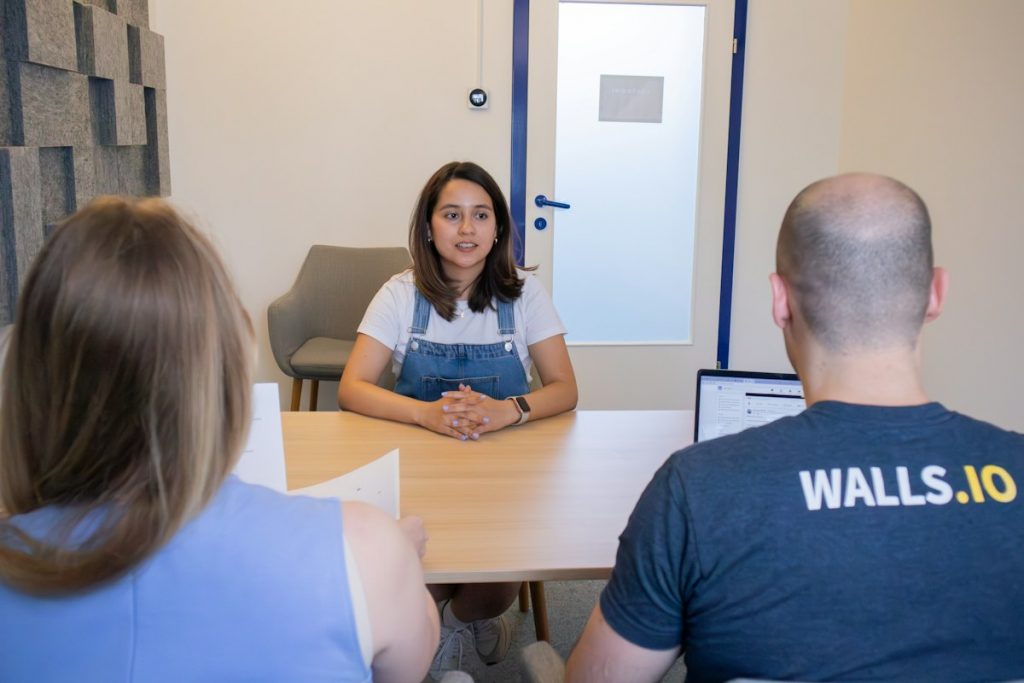
The Art of the Pitch: Why Most Founders Stumble at the Finish Line
You can spend six months building a revolutionary software architecture, drafting spreadsheets, and securing letters of intent. Yet, when sitting across from an endorsing body panel, everything hinges on twenty high-pressure minutes. Most founders do not fail the UK Innovator Founder visa process because their business idea lacks merit. They fail because they cannot explain complex technical innovation in plain, commercially compelling English. As Richard Feynman famously noted, if you cannot explain something simply, you do not truly understand it. When a panel asks you how your business generates cash flow or solves an industry bottleneck, technical jargon will not save you.
This is where targeted rehearsal changes the outcome completely. Walking into an endorsing panel without rigorous verbal practice is like running a marathon without stretching. You need to practise answering unpredictable questions out loud until your narrative flows naturally. Using a purpose-built Innovator Visa Mock Interview gives you the exact pressure-testing environment required to turn raw technical knowledge into an endorsement-ready conversation. If you want to impress an assessor, you must bridge the gap between deep technical skill and sharp business communication.
The Cost of Knowing Too Much: The “Curse of Knowledge”
Have you ever listened to an expert talk for ten minutes, only to realise you have no idea what they just said? That happens in endorsing body interviews every single week.
Psychologists call it the curse of knowledge. Once you understand an advanced concept, like distributed ledger consensus, probabilistic machine learning models, or novel chemical syntheses, you forget what it is like not to know it.
Here is what happens during a pitch:
- The founder explains their underlying architecture.
- The assessor is looking for market viability, customer acquisition costs, and scalability.
- The founder dives deeper into technical specs to prove how clever the product is.
- The assessor concludes that the founder is an engineer, not an executive who can scale a UK commercial enterprise.
Remember the famous interview test: “Explain a p-value to your grandmother.” If you start reciting formulas about null hypotheses and distribution tails, you fail. But if you explain it as flipping a coin ten times to see if someone is cheating at cards, you win. Endorsing bodies are made of human business analysts, not academic thesis reviewers. You must meet them where they stand.
Before you step into that room, you must ensure your written foundation is completely air-tight by using tools like the TorlyAI BP Builder APP to align your operational logic with Home Office requirements.
What Endorsing Bodies Actually Look For
The UK Home Office sets three clear criteria for the Innovator Founder visa: Innovation, Viability, and Scalability.
Every question tossed at you during a panel interview filters directly through these three lenses. If your pitch misses any of them, you walk away empty-handed.
| Visa Criterion | What the Founder Usually Talks About | What the Endorsing Body Actually Wants to Hear |
|---|---|---|
| Innovation | Patented tech, proprietary code, novel architecture | Genuine market distinction, intellectual property defence, why competitors cannot easily copy you |
| Viability | Cash on hand, how hard the team works, code completion | Unit economics, realistic runway, gross margins, cash-flow milestones, regulatory risks |
| Scalability | “We want to expand globally in twelve months” | UK job creation plan, repeatable customer acquisition channels, international market fit |
Notice the trend? The assessors do not want to see your lines of code. They want to know if you can build a sustainable commercial engine that employs people and pays taxes in the United Kingdom.
To demonstrate this, you need a disciplined framework for your spoken answers. If you ramble, you lose control of the room.
Always structure your answers using that simple progression. State your point, back it up with data, explain what it means for your balance sheet, and show why it benefits the UK market.
The Cognitive Load of Live Interviews
Why do smart entrepreneurs stumble during live pitch sessions? It comes down to cognitive load.
When you sit quietly at your desk, your brain has plenty of processing power to structure beautiful paragraphs. But in a live interview room, your brain is balancing multiple tasks at once:
- Reading the body language of three different panellists.
- Filtering out background nerves and physiological stress.
- Recalling specific financial metrics from page 42 of your business plan.
- Translating high-level thoughts into spoken sentences.
If you have never practised speaking your business plan out loud, your brain will short-circuit under that load. You will say “um,” you will jump between unrelated topics, and you will give long-winded answers that bury the lead.
By running multiple practice pitch sessions with an Innovator Visa Mock Interview simulator, you shift these responses from conscious effort to muscle memory. When an assessor challenges your pricing model, you will not have to scramble for words. You will have answered that exact challenge five times before breakfast.
To build the structured documentation behind these verbal arguments, entrepreneurs often rely on the Build your Business Plan NOW suite to generate rock-solid business logic that withstands tough scrutiny.
How AI Reasoning Agents Transform Visa Preparation
Generic artificial intelligence tools are terrible at visa prep. If you ask a standard chatbot to interview you, it will nod along, offer bland encouragement, and tell you that your idea sounds marvellous. That kind of polite feedback is dangerous when you are preparing for a strict UK endorsement body.
Advanced platforms like Torly.ai operate differently. Instead of surface-level text generation, they deploy multi-layered reasoning agents that analyse your proposition against historic endorsing body standards.
These agents test you across three distinct layers:
- Business Idea Qualification: The system looks at your core premise and acts as a ruthless commercial auditor. Are you truly different from existing UK alternatives? Can you prove genuine demand?
- Applicant Background Assessment: Does your past track record justify your position as a founder? Are you qualified to lead this technical roadmap, or are there obvious skill gaps the panel will target?
- Gap Identification and Action Roadmaps: Rather than merely pointing out flaws, the AI identifies where your narrative falls short and gives you structured talking points to plug the holes.
This continuous feedback loop turns an intimidating interview into a systematic, repeatable process. You discover your weak spots in private, long before an official panel has the chance to exploit them.
Common Pitch Pitfalls and How to Fix Them
Over the years, certain interview mistakes crop up again and again among international entrepreneurs. Here are the most frequent blunders and how you can avoid them.
Pitfall 1: Diving into Technical Weeds
When asked, “How does your platform function?”, founders often spend six minutes describing database queries and API protocols.
The Fix: Use the Grandma Test. Explain the operational workflow using a relatable metaphor, then immediately pivot to the commercial value it creates for the user.
Pitfall 2: Vague Market Sizing
Saying “The global software market is worth 600 billion pounds, and we only need 1% of it” will get your application dismissed instantly. Panels hate the top-down 1% argument because it shows a lack of real go-to-market strategy.
The Fix: Present a bottom-up calculation. Show how many specific UK businesses match your ideal customer profile, what you will charge them annually, and the exact marketing channels you will use to convert them.
Pitfall 3: Ignoring Regulatory Hurdles
Claiming that your product has zero legal or regulatory barriers shows naivety. Every genuine business faces hurdles, whether it is UK GDPR compliance, financial service authorisation, or intellectual property registration.
The Fix: Acknowledge the regulations proactively. Explain the exact legal steps, compliances, and advisers you have lined up to keep the business on safe ground.
Developing Muscle Memory for High-Stakes Endorsements
Pitching is a physical skill as much as an intellectual one. You cannot become an exceptional public speaker by reading books on rhetoric; you must speak out loud, listen to your pacing, adjust your tone, and eliminate verbal fillers.
Set aside thirty minutes every day to tackle three hard questions. Record yourself on video or use voice inputs with an intelligent assistant.
Look for these specific metrics:
* Are your opening sentences direct and assertive?
* Do you answer the specific question asked within the first twenty seconds?
* Are you speaking too quickly due to adrenaline?
* Can you pivot back to your core value proposition without sounding robotic?
When you combine consistent verbal rehearsal with an Innovator Visa Mock Interview routine, your confidence shifts from nervous hope to quiet competence. You stop worrying about what might trip you up because you have already ironed out every flaw in your narrative.
Prepare your ideas thoroughly, refine your commercial narrative, and treat your spoken delivery with the same precision you put into your product. That is how you turn a promising business concept into an approved UK Innovator Founder visa.
