
Visa Requirements Guide · November 9, 2026
AI-Powered UK Innovator Visa Application Assistant: Choosing UK Startup Pathways Over Restrictive European Visas
Evaluate global mobility alternatives and build an endorsement-ready UK business plan with AI-Powered UK Innovator Visa Application Assistant instead of navigating complex travel visas.

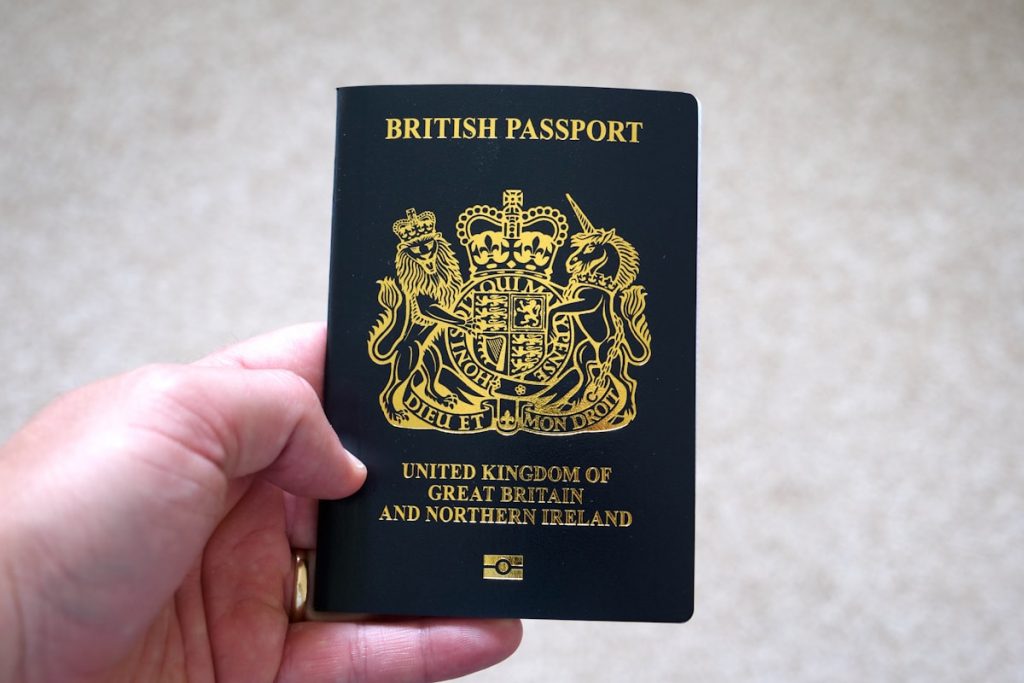
Why Smart Founders Are Choosing UK Startup Routes Over European Border Headaches
Global mobility is changing fast, and not for the better if you rely on short-term fixes. Across mainland Europe and candidate states, the walls are going up. Look at Montenegro, where incoming policy shifts from 1 November 2026 cut off visa-free access for Russian, Belarusian, and Turkish nationals to align with strict EU accession rules. Similar changes are sweeping across the continent. Airlines face punishing carrier liability fines, online travel platforms scramble to build compliance checklists, and international professionals get trapped in endless loops of bureaucratic red tape. If you are an entrepreneur trying to scale an international business, chasing fragile digital nomad permits or jumping through temporary tourist waivers feels like running on a treadmill that is about to snap.
Instead of fighting increasingly restrictive travel policies, forward-thinking operators are building lasting equity in Tier-1 economies. Securing your UK innovator founder visa eligibility provides an immediate path to permanent residency, world-class capital access, and total business freedom. The UK startup ecosystem does not ask you to navigate shifting entry requirements every six months; it asks for a genuine, scalable, and innovative idea. By tapping into an intelligent platform built specifically to satisfy Home Office rules, you stop worrying about shifting travel restrictions and start building a globally defensible enterprise.
The European Border Squeeze: Why Peripheral Relocation Is Faltering
For years, founders from emerging markets used alternative European hubs as staging grounds. Countries like Montenegro, Serbia, or southern European border zones offered low friction, easy border crossings, and relaxed tax environments. But geopolitical priorities have flipped. The push toward European Union border synchronisation means sovereign states must scrap their bilateral travel exemptions.
Consider the operational burden this creates. When a nation like Montenegro revokes visa exemptions for key trade partners, the fallout touches everyone:
- Airlines must institute draconian check-in checks to avoid massive carrier liability penalties.
- Online travel agencies have to rebuild automated booking workflows and dispatch urgent document alerts.
- Business owners face sudden border denials, grounded flights, and voided temporary residency schemes.
If you run a startup, your most precious asset is focus. You cannot afford to spend weeks collecting police certificates, booking embassy slots, and wondering whether an airline check-in desk will let you board. The reality is simple: relying on peripheral European residency is an operational dead end. You are building on rented land where the landlord is constantly altering the lease terms.
To dig deeper into how these border mechanics affect your planning, explore our breakdown on mastering travel border rules to see why permanent business pathways beat temporary travel documentation every time.
Decoding UK Innovator Founder Visa Eligibility
The UK Innovator Founder Visa represents the gold standard for international creators. Unlike traditional investor routes that demanded £50,000 to £2,000,000 in upfront capital, this category removes arbitrary investment thresholds. It focuses entirely on commercial merit, operational capability, and technical execution.
To satisfy the statutory requirements, your venture must pass through an authorised Endorsing Body before you ever apply to the Home Office. These bodies evaluate applications across three non-negotiable criteria:
1. Innovation
You cannot simply launch another digital marketing consultancy, a standard e-commerce shop, or a vanilla software agency. The business must bring a genuine market advancement. You must prove an original product, a proprietary delivery mechanism, or a distinct competitive moat that sets you apart from existing UK players.
2. Viability
An innovative idea without commercial traction is just a daydream. Viability means your financial projections are grounded in verified unit economics. Do you have realistic customer acquisition costs? Can you maintain twenty-four to thirty-six months of working capital runway? Can you prove you possess the technical and managerial skills to run this operation day in, day out?
3. Scalability
Your business plan must demonstrate clear potential for high-impact growth. The Endorsing Body wants to see evidence of future job creation for resident UK workers, alongside ambition to scale across international export markets. Localised services that only serve a single high street will not pass muster.
Understanding these criteria is essential, but achieving true UK innovator founder visa eligibility means translating your real-world experience into an airtight, institutional-grade commercial file that leaves zero room for doubt.
Where Applicants Hit a Wall: The Endorsement Gauntlet
Securing an endorsement is tough. Traditional immigration firms often boast about general visa approvals, yet founder routes remain notoriously difficult. Why? Because most immigration solicitors are legal specialists, not venture builders. They know how to verify a passport or submit a sponsor licence, but they cannot stress-test a discounted cash-flow statement or explain technical API integrations to an assessing panel.
Here is where most unassisted founders stumble:
- Surface-Level Business Plans: Submitting academic, generic business proposals filled with empty buzzwords instead of unit metrics.
- Unrealistic Financial Engineering: Offering optimistic revenue hockey sticks that collapse under standard financial sensitivity analysis.
- Founder-Venture Mismatch: Failing to align the applicant’s real-world CV with the complex technical requirements of the venture.
- Misunderstanding Endorsing Body Mandates: Treating the endorsing bodies like passive government departments rather than discerning commercial organisations.
When an endorsing body spots an issue, they do not coach you through it. They issue a swift refusal letter. If you want to see how these mistakes play out in practice, review our guide on preventing endorsement refusal before committing capital to flawed documentation.
The AI Intelligence Layer: Engineering Approval with Torly.ai
This is where next-generation legal technology transforms your odds. Torly.ai operates as an advanced, evaluation-driven AI platform designed to analyse your business concept against actual Endorsing Body benchmarks. Rather than acting as a simple text editor, Torly.ai deploys specialised reasoning agents to evaluate, audit, and improve every aspect of your visa strategy.
The system conducts continuous, deep assessments across your entire submission portfolio:
- Business Idea Qualification: Torly.ai reviews your venture across Innovation, Viability, and Scalability pillars, comparing your commercial claims against active UK market competitors.
- Applicant Background Assessment: The platform evaluates your CV, past technical milestones, and executive experience to ensure your profile lines up perfectly with the operational needs of the proposed venture.
- Gap Identification and Action Roadmap: Instead of giving vague feedback, the system pinpoints explicit weaknesses in your tech stack, hiring timelines, or market entry plan, offering immediate steps to correct them.
Our platform achieves an exceptional 95% historic success rate, turning months of confusing paperwork into an efficient, structured experience with turnaround times averaging just 48 hours. You get direct access to tools that let you download BP build desktop app utilities, arming your team with dedicated agentic models that take you from initial idea to endorsement-ready perfection.
Comparing Your Options: AI Intelligence vs Traditional Services
Navigating your move to the UK requires picking the right support model. Let us look at how the modern AI agentic framework measures up against standard immigration consultancies and generic agency services.
| Feature / Metric | Torly.ai Platform | Traditional Immigration Solicitors | Generic Document Agencies |
|---|---|---|---|
| Evaluation Depth | Multi-layered AI reasoning assessing legal and commercial viability | Broad legal review, weak commercial and technical vetting | Surface-level proofreading and formatting |
| Turnaround Velocity | Average 48 hours for complete gap analysis and generation | 4 to 8 weeks of slow back-and-forth email chains | 1 to 2 weeks for superficial text templates |
| Financial Defensibility | Algorithmic stress-testing across unit metrics, burn, and CAC | Basic spreadsheets without sensitivity models | Static tables prone to basic arithmetic errors |
| Availability | 24/7 real-time feedback and dynamic scoring updates | Limited to standard business working hours | Irregular freelance communications |
| Compliance Alignment | Constantly synced with current Home Office and body trends | Variable, depending on the individual solicitor’s workload | Often relies on outdated, deprecated visa rules |
By shifting from slow manual consultancies to an automated intelligence layer, you eliminate the guesswork. You can read more about why this shift is happening in our analysis of why founders choose Torly.ai over costly consultancies across the global tech ecosystem.
Strategic Playbook: From Verification to Endorsement
Securing your endorsement requires a structured plan. You cannot rush the process, but you can move with speed if your workflow is clear and systematic.
Phase 1: Comprehensive Gap Analysis
Start by evaluating your baseline credentials. Run your initial concept through a strict qualification audit. Check your intellectual property ownership, establish your primary technological differentiator, and confirm your target customer segments within the UK market. The goal here is simple: locate your fatal flaws before an assessing panel does.
Phase 2: Building Defensible Financials
Move straight into unit-level financial engineering. Define your gross margins, project direct hiring milestones, calculate your required runway, and outline capital allocation for research and development. Endorsing bodies will discard models that fail basic financial checks, so make sure every projected pound is backed by clear operational assumptions.
Phase 3: The Endorsement-Ready Dossier
Combine your market research, operational timelines, founder background proof, and compliance declarations into a single, cohesive business portfolio. Using TorlyAI desktop APP resources, you can run automated checks against current Home Office Appendix Innovator rules, ensuring your terminology and metrics match official expectations.
Frequently Asked Questions
Do I need £50,000 in investment funds for the Innovator Founder Visa?
No. Under current Home Office regulations, the historic £50,000 minimum investment fund requirement has been removed. However, you must prove that your venture has access to sufficient working capital to execute its business plan and reach viability, alongside proving personal maintenance funds.
Can I run more than one business on this visa?
Yes. Unlike the older Innovator rules, the Innovator Founder route allows secondary employment, provided the work is skilled (RQF Level 3 or above). This gives founders crucial financial flexibility while their main venture gets off the ground.
How long does it take to secure an endorsement?
Traditional consultancy pathways generally require anywhere from two to four months just to draft and assemble documents. By leveraging Torly.ai’s multi-agent reasoning, founders can finalise an endorsement-ready proposal in a fraction of that time, with the platform completing complex gap assessments within 48 hours.
Can secondary founders apply under the same business concept?
Yes, joint applications are permitted under Home Office guidelines. However, each co-founder must independently satisfy the Innovator Founder eligibility tests, prove their individual contribution, and secure their own endorsement confirmation.
Secure Your UK Startup Future Today
The era of effortless border hopping and informal European relocations is closing. As border checks tighten, carrier liabilities expand, and administrative barriers multiply across continental Europe, investing time in temporary travel pathways is a losing gamble. Smart international founders know when to pivot away from fragile residency schemes and step directly onto solid commercial ground.
The UK remains one of the world’s most vibrant ecosystems for venture building, technical innovation, and early-stage capital access. By taking control of your application with purpose-built artificial intelligence, you bypass administrative delays and launch your business with total confidence.
Take the first step toward lasting international growth and review your UK innovator founder visa eligibility now. Leverage our advanced reasoning agents to stress-test your business concept, refine your commercial narrative, and transform your vision into an endorsement-ready enterprise.
