
Startup Visa Guides · September 8, 2026
Denmark vs UK Startup Pathways: Evaluate Your Business Plan with AI-Powered UK Innovator Visa Application Assistant
Compare Denmark and UK startup pathways while discovering how the AI-Powered UK Innovator Visa Application Assistant uses AI agents to craft endorsement-ready UK business plans.

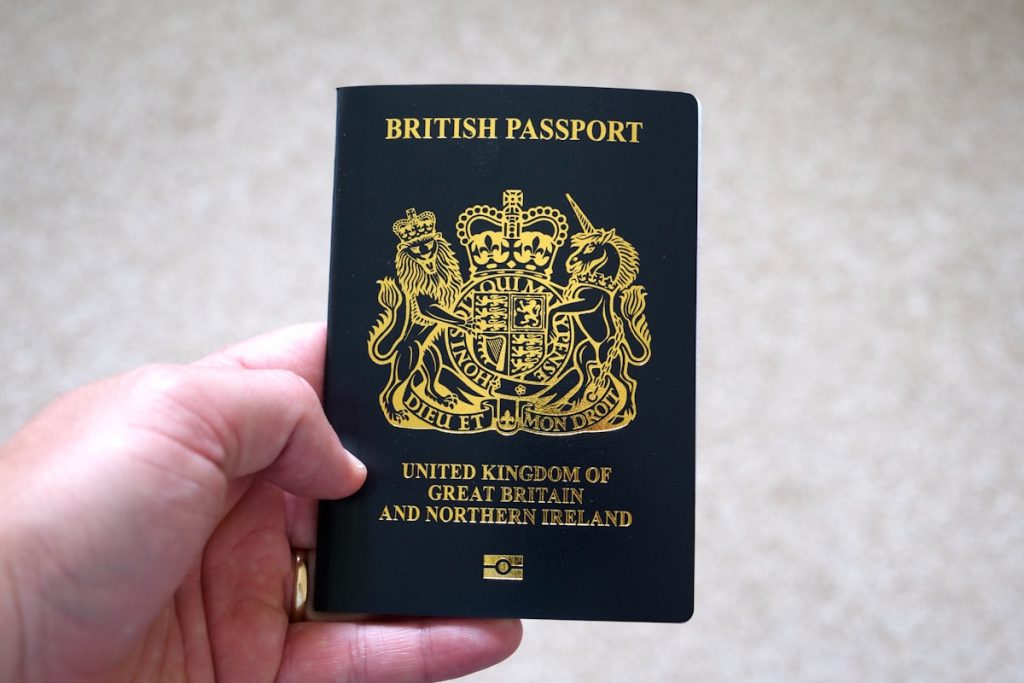
The European Founder Dilemma: Copenhagen or London?
Deciding where to base your tech startup across Europe is a major fork in the road. Denmark offers high living standards, straightforward public administration, and a direct route through its Start-up Denmark initiative. On the flip side, Britain delivers unmatched venture capital access, a massive domestic consumer base, and deep talent pools. When comparing both routes, your entire immigration journey depends on one single document: your business plan. Whether you aim for the Nordic ecosystem or look toward the British market, understanding how to draft an endorsement-grade proposal is critical. If your eyes are set on Britain, you will quickly find that drafting a watertight UK Startup Visa Business Plan using an AI-Powered UK Innovator Visa Application Assistant can turn months of guesswork into a precise, approval-focused submission.
The Danish scheme and the UK Innovator Founder route look similar on paper, yet they demand very different strategic approaches. Denmark relies on an independent expert panel under the Danish Business Authority, whereas the UK leans on designated endorsing bodies assessing innovation, viability, and scalability. Many founders get stuck trying to retrofit a standard investor deck into these rigid immigration frameworks. In this guide, we break down costs, timelines, caps, and assessment criteria between Denmark and Britain. Most importantly, we examine how next-generation AI agents help you rigorously pressure-test your venture profile so you satisfy endorsing body panels on your first attempt.
The Danish Route: Understanding the Start-up Denmark Scheme
The Start-up Denmark scheme welcomes non-EU/EEA founders who want to build high-growth, innovative companies. Run jointly by the Danish Business Authority and the Danish Agency for International Recruitment and Integration (SIRI), it grants a residence and work permit for up to two years, extendable for another three.
Core Eligibility and The Expert Panel
You cannot simply turn up with a small local business. Denmark flatly rejects traditional business models like standard retail shops, import-export operations, or local restaurants. The scheme demands genuine innovation that benefits the wider Danish economy.
Before you ever submit documents to SIRI, an independent panel of business experts appointed by the Danish Business Authority must evaluate your proposal. They review your concept, market traction, business model, and the backgrounds of your team. You can apply alone or as a team of up to three founders sharing a single business proposal.
The Quota Bottleneck
Here is the catch: Denmark caps this route hard. Only 75 foreign entrepreneurs receive permits under this scheme each year (running 1 January to 31 December). Even if your idea has merit, you face strict rationing.
Maintenance Funds and Operational Rules
Beyond the panel review, SIRI enforces strict financial self-sufficiency checks. For 2025, an individual founder must hold at least DKK 153,240 in liquid capital. If you bring a spouse, that doubles to DKK 306,480. Adding children increases the threshold further (up to DKK 356,904 for a partner and children).
Furthermore, you must hold real equity and take an active operational role. Silent investors or pure shareholders need not apply. Holding companies are also barred; the business must actively trade.
The UK Innovator Founder Route: Built for Global Scale
The UK replaced its legacy Start-up route by modernising the Innovator Founder visa. Britain removed the old £50,000 personal investment requirement, focusing instead on whether the applicant is a genuine, hands-on entrepreneur driving high-growth innovation.
The Three Endorsement Pillars
UK Home Office rules mandate that every business must clear three statutory hurdles judged by an approved endorsing body:
- Innovation: Does your product or service solve a genuine problem in a novel way? Is there clear intellectual property, technical complexity, or a unique process that competitors cannot easily copy?
- Viability: Do you have the skills, market validation, and realistic financial projections to deliver? Can the venture break even and trade sustainably?
- Scalability: Is there clear potential to generate national employment and expand into international markets?
Unlike Denmark’s 75-visa annual ceiling, the UK does not cap endorsement numbers. If your proposal satisfies the criteria, you can secure endorsement. To test your venture against these exact benchmarks before approaching an endorsing body, smart founders turn to TorlyAI BP Builder APP to build an endorsement application with 6 specialised AI agents, ensuring zero gaps in their submission.
Head-to-Head Comparison: Denmark vs United Kingdom
To give you an honest overview, here is how both pathways stack up:
| Feature | Start-up Denmark | UK Innovator Founder Visa |
|---|---|---|
| Annual Quota | Strictly 75 per calendar year | No statutory cap |
| Initial Validity | 2 years | 3 years |
| Settlement Timeline | Permanent residency typically after 8 years (reduced to 4 under exceptional conditions) | Accelerated settlement (ILR) in as little as 3 years |
| Initial Government Fee | DKK 3,060 (~£350) + biometrics | £1,191 visa fee + £1,000 endorsing body fee + Immigration Health Surcharge |
| Founding Team Size | Up to 3 founders per shared plan | Multiple founders permitted (each must have an active, distinct role) |
| Assessment Authority | Danish Business Authority Expert Panel | Approved independent Endorsing Bodies (e.g., Envestors, Innovator International) |
| Secondary Employment | Strictly limited to the approved startup; side jobs require separate permits | Secondary work permitted in skilled roles outside your business |
The UK pathway provides a far faster track to indefinite leave to remain (ILR), offering settlement after just three years if you hit measurable milestones (such as generating £200,000 in revenue or creating substantial local jobs). Denmark’s eight-year path to permanent residency requires much longer commitment.
Why Founder Business Plans Fail at the Endorsement Stage
Immigration business plans are fundamentally different from typical venture pitch decks. Pitch decks show optimistic vision, while endorsing bodies look for legal and structural compliance.
Common Pitfalls in UK Visa Submissions
- Vague Market Research: Saying your total addressable market is worth £10 billion means nothing without showing local customer acquisition costs, channel partners, and pipeline tests.
- Generic Features Masked as Innovation: Building a basic e-commerce shopfront or integrating a standard OpenAI API wrapper is rarely classed as proprietary innovation by UK assessors.
- Unrealistic Financials: Endorsing bodies spot inflated year-one revenues instantly. Your balance sheet, cash flow forecasts, and operational margins must reflect real-world overheads, National Insurance contributions, and UK corporation tax rates.
- Passive Founder Profiles: Assessors want to know why you must lead this business inside the UK. If your operational history does not match your business goals, the visa is rejected.
To eliminate these blind spots early, you can evaluate your commercial narrative through a rigorous assessment using an AI-Powered UK Innovator Visa Application Assistant to identify structural weaknesses before submission.
Evaluating Your Plan with Torly.ai: Advanced Agentic Intelligence
Preparing an endorsement submission used to mean spending thousands of pounds on immigration solicitors who often knew the legal rules but lacked technical, startup-building expertise. Torly.ai changes this dynamic by deploying a specialised intelligence layer for startup immigration.
Instead of acting as a basic writing prompt, Torly.ai runs an advanced, evaluation-driven engine powered by next-generation reasoning agents. The platform evaluates whether your venture meets UK Home Office standards through three distinct layers:
- Business Idea Qualification: The system dissects your concept against historical endorsing body trends, evaluating whether your technical stack and delivery model offer enough distinct IP to pass the innovation test.
- Applicant Background Assessment: It analyses your CV, technical skills, and commercial accomplishments to ensure you are positioned as an indispensable founder.
- Gap Identification and Action Roadmap: Torly.ai generates concrete next steps to fix weak financial projections, flesh out competitor analyses, and tighten operational milestones.
If you are ready to produce a compliant document package, you can download BP Build Desktop APP to create your business plan directly onto your machine for structured, step-by-step guidance.
Step-by-Step: Moving from Concept to Endorsement
Navigating the UK Innovator Founder route requires steady, deliberate progress:
1. Stress-Test the Value Proposition
Do not spend weeks writing an eighty-page document until you have confirmed your core premise meets the definition of innovation. What specific technological or process breakthrough does your UK business bring?
2. Assemble Financial Forecasts
Build bottom-up cash flow statements, realistic burn rates, and hiring schedules. If you plan to recruit local UK talent, budget for employer pension contributions and UK payroll structures. When you need to turn raw numbers into an investment-ready document, you can build your business plan now using dedicated agent workflows configured for visa regulations.
3. Polish the Operational Plan
Detail your milestones for month 6, 12, and 24. Endorsing bodies hold mandatory check-in reviews at regular intervals. If your initial business plan promises unachievable metrics, you will face complications during renewal.
4. Complete the Endorsement Review
Submit your completed plan alongside reference letters, customer letters of intent, and technical architecture diagrams to an approved endorsing body. Once awarded your endorsement letter, submit your final application to the UK Home Office within three months.
Choosing the Best Environment for Your Venture
If your goal is simple European mainland access, quality public services, and you are comfortable working under a strict 75-person national annual quota, Start-up Denmark offers a stable home.
However, if you want access to Europe’s largest tech investment hub, flexible secondary employment options, and an accelerated three-year route to permanent residency, the UK is hard to beat. The UK Innovator Founder visa provides a clear framework for ambitious international founders.
You do not have to navigate the complex application requirements alone. You can turn your entrepreneurial ambitions into an approval-ready application by using an AI-Powered UK Innovator Visa Application Assistant to design a compliant, scalable venture profile that secures endorsement.
