
Torly.ai · September 8, 2026
Master Your UK Business Plan: AI-Powered UK Innovator Visa Application Assistant for Guaranteed Endorsement Readiness
Learn essential endorsement requirements and streamline your venture strategy with AI-Powered UK Innovator Visa Application Assistant, your intelligent platform for 24/7 visa evaluation.

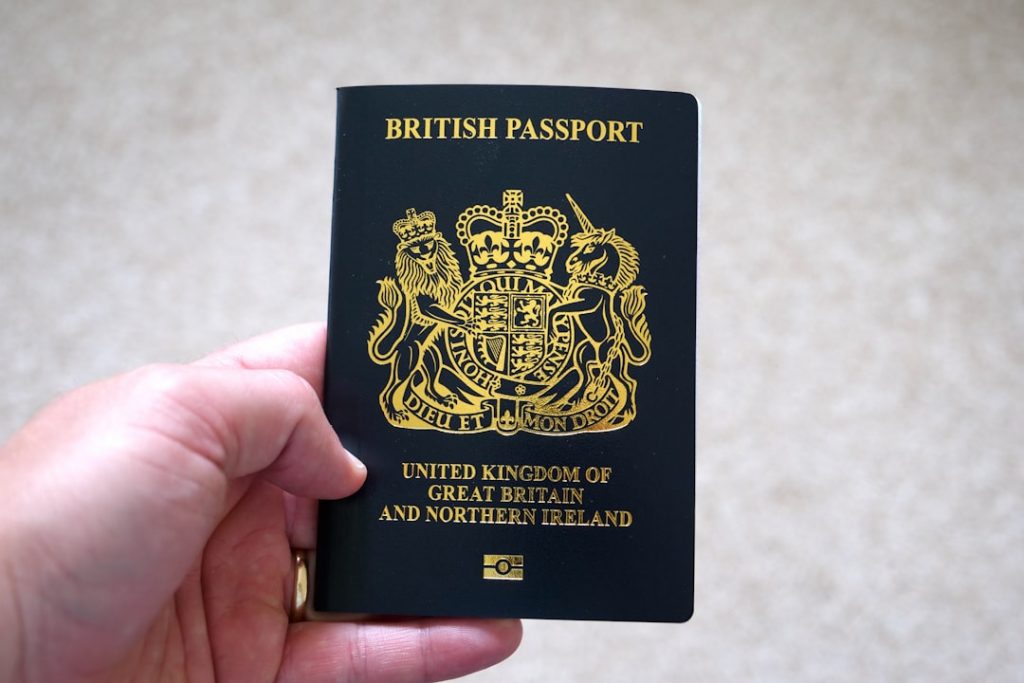
The Evolution of the UK Startup Visa Business Plan
Let us address the elephant in the room straight away. If you are researching how to draft a UK Startup Visa Business Plan, you have probably noticed conflicting advice across immigration forums and legal websites. The UK Home Office officially closed the legacy Start-up Visa route to new applicants in mid-2023, rolling its core spirit into the updated Innovator Founder Visa pathway. While the name changed, the core challenge remains identical: you need a rock-solid, commercially viable, highly scalable venture proposal to secure an endorsement from an approved organisation before the Home Office will even look at your passport.
Navigating this transition requires more than just basic document templates. Traditional law firms often charge thousands of pounds simply to review paperwork without providing deep technological validation. To ensure you stand out, you can explore the UK Startup Visa Business Plan evaluation on Torly.ai, an advanced intelligence layer designed to assess founder credentials and operational concepts against rigorous UK endorsing body criteria. Preparing an application today is not about writing a 60-page essay; it is about showing undeniable commercial momentum and innovation from day one.
The Reality Check: Start-up Visa vs Innovator Founder Route
Historically, the Start-up route provided early-stage founders with two years in the UK without requiring substantial investment funds. It was friendly, relatively flexible, but it came with a catch: it did not lead directly to Indefinite Leave to Remain (ILR). Founders always had to switch into another category later on.
The newer Innovator Founder Visa replaced this framework. It removed the old requirement for £50,000 in minimum investment funds for most candidates, which sounds great on paper. However, the scrutiny placed on the business idea itself intensified dramatically. The endorsing bodies (EBs) now operate with strict mandates. They do not hand out endorsements lightly.
To clear the bar, your proposition must satisfy three distinct pillars:
- Innovation: You cannot simply launch a standard consultancy, a local coffee shop, or a clone of an existing marketplace. The product or service must bring genuine intellectual property, a novel process, or a distinct technical advantage to the British market.
- Viability: Can you actually pull this off? Endorsers look closely at your background, your technical capabilities, your operational costs, and your cash flow forecasts.
- Scalability: You must prove structured plans for job creation for settled workers and realistic avenues for domestic and international growth.
If your pitch sounds like a local lifestyle firm, it gets rejected immediately. Endorsing bodies want businesses that will generate measurable domestic value, export opportunities, and local employment.
The Traditional Solicitor Route vs Intelligent Agentic Workflows
When founders realise how high the bar sits, their immediate reaction is often to ring an immigration solicitor. While reputable legal firms excel at verifying identity documents and handling formal Home Office communications, they frequently stumble when evaluating early-stage software architectures, go-to-market strategies, or unit economics.
A solicitor looks at immigration compliance; an endorsing body looks at commercial execution.
If you hand a generic legal firm your pitch deck, they will check whether your financial projections contain the right statutory disclosures. What they often miss are the red flags venture analysts spot instantly: unrealistic customer acquisition costs, weak technological defensibility, or vague TAM (Total Addressable Market) calculations.
This is where specialised digital solutions bridge the gap. Rather than spending weeks waiting for manual legal feedback, you can Build your Business Plan NOW using dedicated tooling that tests your assumptions against real-world commercial benchmarks before you submit your file to an endorsing panel.
The Anatomy of an Endorsement-Ready Strategy
Let us break down what an endorsing assessor actually expects when reviewing your documentation. They do not want fluff. They want clear, concise data supported by clear logic.
1. The Core Innovation Thesis
What problem are you solving, and why can an existing British company not solve it tomorrow?
- Describe your proprietary methodology or technology stack.
- Clearly state your barriers to entry (patents, exclusive supplier agreements, proprietary algorithms).
- Avoid empty buzzwords; explain the mechanics of how your solution works.
2. Deep Market and Competitor Analysis
Do not state that you have “no direct competitors.” Assessors view that statement as proof of poor research.
- Map your primary competitors in the UK and European ecosystems.
- Highlight the pricing or feature gaps your product targets.
- Include realistic figures on the market size, citing credible industry sources.
3. Practical Financial Modeling
Your balance sheet and profit-and-loss projections must make sense. Endorsing assessors see hundreds of pitches a month; they spot inflated projections instantly.
- Provide a 3-year cash flow forecast.
- Detail the cost of customer acquisition (CAC) and customer lifetime value (LTV).
- Account for UK employment costs, including employer National Insurance contributions and workplace pensions.
To streamline this structural assembly, many entrepreneurs rely on TorlyAI BP Builder APP to align financial forecasts, team roles, and market data directly with current endorsing body standards.
Why Founder Capability Matters as Much as the Product
An incredible business concept will fail endorsement if the founding team lacks the background to execute it. Endorsing bodies assess founder suitability with clinical precision. They need to see evidence that your past experience, qualifications, and industry network align directly with the venture you propose.
Are you building a MedTech tool without healthcare experience? You will face intense pushback unless you have secured high-profile medical advisors or a technical co-founder. Are you launching an enterprise B2B platform? You must demonstrate prior sales experience or operational leadership.
Assessing your own weaknesses objectively is tough. Most entrepreneurs suffer from optimism bias. Leveraging an AI-Powered UK Innovator Visa Application Assistant provides an impartial gap-analysis, highlighting weaknesses in your CV, team structure, or execution plan that might otherwise trigger a rejection during the review stage.
Common Pitfalls That Lead to Immediate Rejection
Even strong entrepreneurs fall victim to avoidable blunders during the application process. Keep these common traps in mind:
- Copy-Pasting Standard Business Plans: Using generic online templates is the fastest way to get your application discarded. Endorsement assessors run submissions through sophisticated detection tools to ensure the material is original and tailored specifically to the UK market.
- Ignoring Settled Worker Job Creation: The UK government wants domestic job growth. If your scaling model relies entirely on offshore remote workers with zero planned hires inside the UK, you will struggle to meet the scalability metric.
- Vague Capital Expenditure Details: Saying you need “£50,000 for marketing” is inadequate. You must explain the distribution: paid search, content partnerships, trade events, or agency fees.
- Failing the English Language Requirement: Never leave your language credentials to the last minute. Ensure your qualifications match the approved Secure English Language Test (SELT) list or UK ENIC standards.
Before you invest non-refundable submission fees, take time to Build your Business Plan NOW to stress-test your narrative against potential red flags.
The Endorsement Interview: What to Expect
If your written proposal passes initial screening, you will usually be invited to a formal interview with the endorsing panel. This is not a casual chat. It is a technical defence of your business case.
Assessors will question your baseline assumptions. They will ask how you plan to handle cash crunches, what happens if your primary customer segment fails to convert, and how your supply chain holds up under local regulatory hurdles. You cannot delegate this interview to a representative. You must know your numbers, your timeline, and your operational roadmap inside and out.
Practising your pitch against critical operational feedback ensures you can answer granular questions about UK VAT, regulatory compliance, and customer acquisition channels without hesitation.
Bringing It All Together for a Seamless Submission
Securing an endorsement for the UK Innovator Founder route requires absolute diligence. The process demands an innovative enterprise concept, an ironclad financial model, and clear evidence of your capability to lead the venture. By understanding the shift away from the legacy Start-up route toward high-impact innovation, you position yourself ahead of applicants who rely on outdated advice.
Do not let administrative hurdles or weak strategic documentation derail your entrepreneurial ambitions. Take control of your venture strategy early, evaluate every risk factor, and prepare your materials with precision. For an intelligent, continuous assessment of your paperwork and operational readiness, start your journey with the AI-Powered UK Innovator Visa Application Assistant today to turn your UK enterprise vision into a fully compliant, endorsement-ready reality.
