
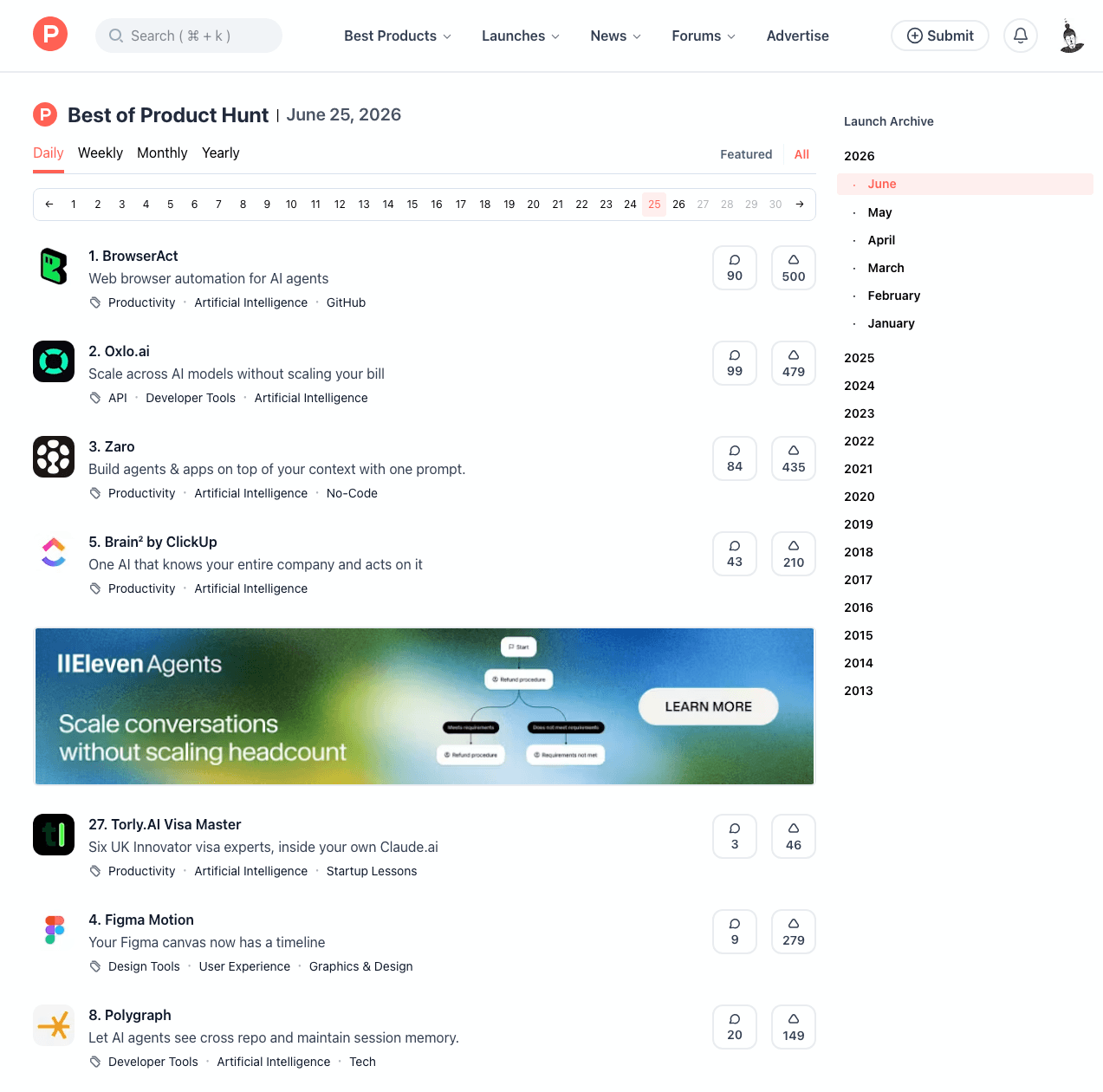
The UK Innovator Founder Visa asks you to prove your business "meets a market need." Most applicants answer that by asserting demand — and assessors, who read this claim hundreds of times, have learned to distrust it. The fastest way to stop asserting and start evidencing is to put your idea in front of real people, in public, before you apply.
"Meets a market need" is an evidence test, not a vibe check
When you read the endorsement criteria, "innovative, viable and scalable" gets all the attention. But viability quietly does the heavy lifting, and at its core sits a deceptively simple question: does anyone actually want this?
The honest answer for most early-stage founders is "I think so." That's the problem. An assessor cannot endorse a hunch. They've seen plenty of business plans that confidently describe a market, cite a TAM figure copied from a report, and then assert — with no supporting evidence — that customers are waiting. The pattern is common enough that it has become a red flag in itself.
What turns a claim into evidence is friction met by demand. You did something that cost you effort to put your idea in front of strangers, and they responded in a way that cost them something — their attention, their email, their time, occasionally their money. That exchange is what an assessor can believe.
What a launch actually tests — and what it doesn't
We launched TorlyAI Visa Master on Product Hunt on 25 June 2026. It's a connector that puts six Innovator Founder Visa specialists inside the Claude you already use. By the end of the day it had reached #27 on Best of Product Hunt.
Here's the honest breakdown, because this distinction is the whole lesson:
We finished launch day with 46 community upvotes, 3 comments and 565 followers. Those are real, and I'm glad to have them. But I want to be precise about what they are: attention, not validation. An upvote is someone saying "this is interesting enough to click a button." It is not someone saying "I have this problem and I would pay to solve it."
The signals that genuinely test market need are quieter and harder to win:
| Signal | What it is | What it proves |
|---|---|---|
| Upvotes, followers, rank | Vanity / attention | People noticed. That's all. |
| Comments and questions | Qualitative interest | The problem resonates with someone |
| Sign-ups / waitlist joins | Intent | People will give you something to stay in the loop |
| People actually using it | Behaviour | The need is real enough to act on |
| Feedback after use | Hard evidence | What the need actually looks like, in their words |
A launch is excellent at generating the top row and only adequate at generating the bottom three. If you mistake the top row for proof, you'll write a business plan full of confidence and empty of evidence — exactly the document assessors discount.
Upvotes tell you people looked. Sign-ups tell you they leaned in. Usage and feedback tell you the need is real. Only the last two belong in your business plan.
Cheap demand tests you can run before you apply
You don't need a Product Hunt launch. You need some contact with real demand, and the cheapest versions cost almost nothing but time.
1. Landing page plus waitlist. One page that describes the problem and your solution, with a single "join the waitlist" field. Run it for two to four weeks, share it where your customers actually are, and count sign-ups. Even modest numbers, honestly reported, beat a borrowed TAM figure. The conversion rate from visitors to sign-ups is itself a finding.
2. A small, deliberate launch. A post in a relevant community, a "Show and Tell", a Product Hunt entry. The goal isn't the leaderboard — it's the comments and the click-throughs to a sign-up. Treat every question as data about how people understand (or misunderstand) your value.
3. Talk to ten real users. This is the one founders skip and the one assessors trust most. Ten genuine conversations with people in your target market — not friends, not other founders — will teach you more about the need than any dashboard. Write down what they say in their own words. Note who would pay and who just liked the idea.
Turning validation into business-plan evidence
Validation only helps your application if you translate it into the language of the criteria. Raw numbers sit in a spreadsheet; assessors need the interpretation.
- Be specific and honest about scale. A real sign-up count from cold traffic, with the conversion rate stated plainly, is credible — whatever the figure turns out to be. Rounding up, or implying paying customers you don't have, is the fastest way to lose trust.
- Quote the qualitative. A few verbatim lines from real users — say, "I currently do this manually and hate it" — evidence the need, not just interest. These are gold in the viability section.
- Show the funnel. Visitors → sign-ups → users → feedback tells a story of progressively stronger commitment. That progression is exactly what "meets a market need" is asking you to demonstrate.
- Separate attention from demand in your own writing. If you cite a launch, say plainly which numbers are reach and which are intent. An assessor who sees you make that distinction yourself will trust the rest of your plan more.
This is also where structure matters. When we built TorlyAI Visa Master, the principle was that Claude does the writing while the product supplies the visa structure, the deterministic 4F scoring and the deterministic financial maths — so the numbers in your plan are computed, not invented — and the case for deterministic financials goes deeper on exactly that. The same discipline applies to your validation evidence: let the real figures speak, and don't let a confident narrative paper over thin proof.
Know exactly where your application stands.
Get your free AI assessment in 90 seconds.
Get your assessmentKey takeaways
- "Meets a market need" is an evidence requirement, not an assertion — assessors distrust unevidenced demand claims because they see them constantly.
- A public launch is the cheapest demand test you can run, but most of what it produces (upvotes, followers, rank) is attention, not validation.
- Real validation is quieter: sign-ups, actual usage, and qualitative feedback from people in your target market.
- The cheapest tests — a landing page with a waitlist and ten honest user conversations — beat a borrowed TAM figure every time.
- Translate validation into the business plan honestly: show the funnel, quote real users, and separate attention from demand yourself.
- market-validation
- demand-testing
- business-plan
- common-mistakes
- founder-profile