
Almost nobody fails the Innovator Founder Visa for lack of effort. They fail because they did the right work at the wrong moment — drafting a forty-page plan before the idea was pressure-tested, or rehearsing for an endorsement interview while the financial model still had a hole in it. The founders who clear it are the ones who match their effort to the stage they are actually at.
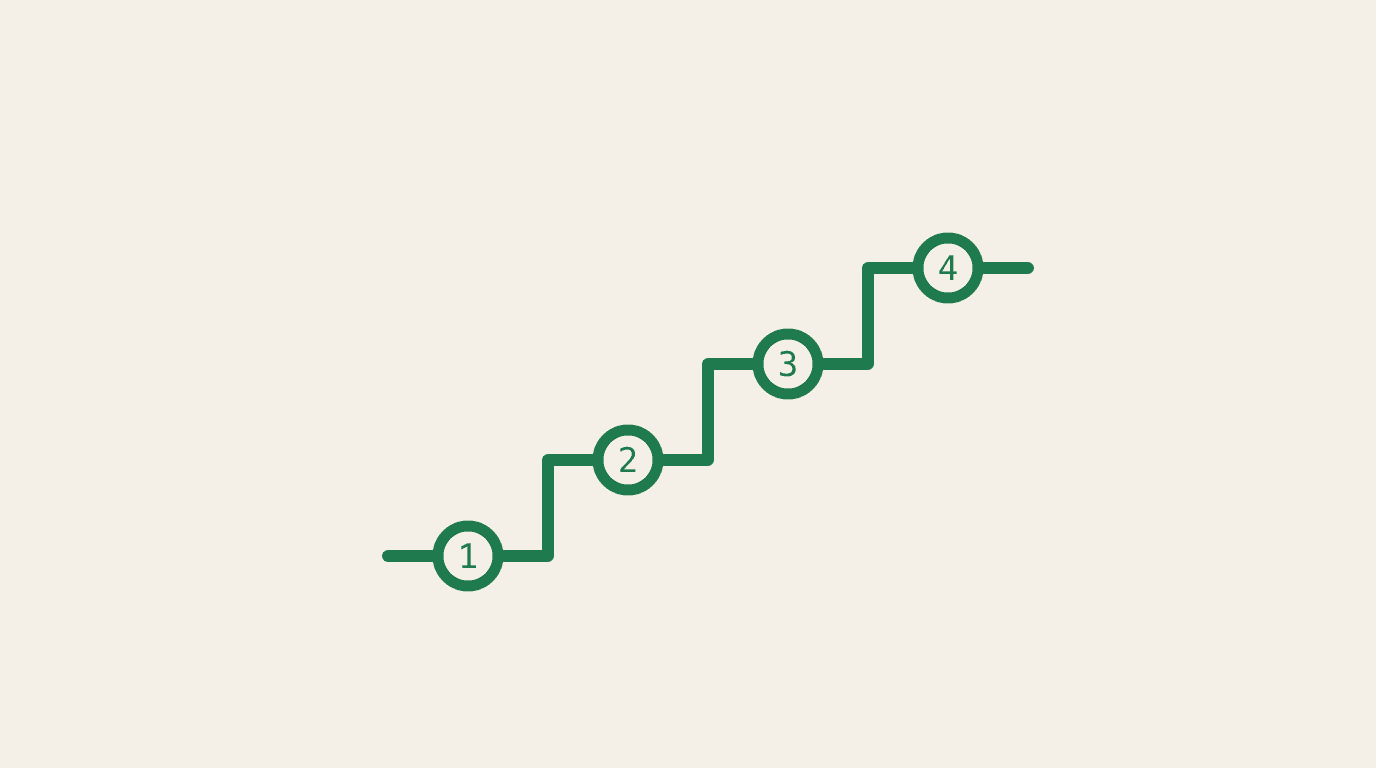
There are four stages, and you move through them in order: Learner → Explorer → Doer → Leader. Each has a different job-to-be-done, a different way to fail, and a different definition of "good." This is the map of all four — and the entry point to the rest of this series, where each stage gets its own deep dive.
Key Takeaways
- Every Innovator Founder Visa founder moves through four stages — Learner, Explorer, Doer, Leader — and the stage is about the job in front of you, not your seniority.
- The route is endorsement-based: an approved body assesses your business against innovation, viability, and scalability before you ever touch the Home Office application.
- Since April 2023 there is no fixed investment-funds requirement; the bar moved onto the business and the founder instead.
- The most expensive mistake is stage-jumping — writing the plan before the idea is tested, or prepping the interview before the model holds up.
- TorlyAI meets you at each stage: free learning and assessment, your visa specialists inside Claude, a full plan build, and a done-for-you submission.
Why think in stages at all?
The Innovator Founder Visa is not a single task you complete. It is a sequence of decisions, each of which only makes sense once the one before it is settled. An endorsing body — Envestors, Innovator International, or UK Endorsing Services — has to be convinced your business is innovative, viable, and scalable, and that you are the right person to build it. You cannot prove viability before you have a defensible idea. You cannot rehearse the interview before the plan exists. You cannot delegate the build before you know what good looks like.
So the question is never "how do I get the visa." It is "what is the next decision in front of me, and what would settle it." That single reframe is what the four stages give you — find the stage that matches the decision you are stuck on, do that work properly, then look at the next one.
Stage 1 — The Learner: is this route even for me?
Where you are. You have heard the Innovator Founder Visa might fit, but you are not yet sure your idea qualifies, or what the endorsing bodies actually look for. You may have an idea, half an idea, or a few competing ideas.
The job-to-be-done. Understand the route honestly and test the basics — is the idea genuinely new and not already trading in the UK (the route is only for new businesses), and does it have a shot at clearing the innovation, viability, and scalability bar. The single most useful thing you can do here is reality-check the idea before you fall in love with it.
What good looks like. You can explain, in plain terms, why your idea is innovative, who it serves, and why now. You know the difference between a hobby project and an endorsable venture — and you have not wasted a month drafting a plan for an idea that was never going to qualify.
How to fail. Skipping straight to writing. The classic Learner mistake is treating the application as a writing exercise when it is first a qualification exercise.
TorlyAI meets the Learner with a free AI assessment and a Learning Center — you run your idea through a first-pass check, see where it stands against the criteria, and learn the route without committing anything. Low-cost clarity before high-cost effort. Read the full breakdown in The Learner: start right.
Stage 2 — The Explorer: does the idea actually clear the bar?
Where you are. You have a viable idea and you are reasonably confident in it — and you already work inside Claude.ai for a lot of your thinking. What you want now is a rigorous second opinion before you commit serious time.
The job-to-be-done. Pressure-test the idea against how an endorsing body will actually score it. Not "is this a good business?" but "where, specifically, will an assessor attack this?" The most useful lens here is the 4F Innovation Matrix: Product–Market Fit, Founder–Market Fit, British-Market Fit, and a Fortune factor — the dimensions that decide endorsement, scored so you can see your weakest one.
What good looks like. You know your weakest dimension before an assessor finds it, and you have closed the gap or have a plan to. You have stopped polishing your strengths and started fixing your one real weakness.
How to fail. Confirmation-seeking. The Explorer who only asks "is my idea good?" gets a yes and learns nothing. The Explorer who asks "where does this break?" gets useful answers.
TorlyAI meets the Explorer with the Air connector — it brings six visa specialists, the 4F scoring, and business-plan scaffolding directly inside your own Claude.ai. You do not leave the tool you already think in; you just gain a panel of experts who score the way an endorsing body scores. The deep dive is in The Explorer: test in Claude.
Stage 3 — The Doer: build the endorsement-ready submission
Where you are. You have committed. The idea is sound, the gaps are understood, and now you have to produce the actual documents an endorsing body reads: a full business plan, a credible financial model, and the answers you will give in the endorsement interview.
The job-to-be-done. Build a complete, coherent, defensible submission — fast. This is the heaviest-lifting stage, and the one where founders most often stall, because a business plan that survives expert scrutiny is genuinely hard to write alone.
What good looks like. A business plan with no soft spots, a financial model that ties together and survives "walk me through your assumptions," and interview answers you can deliver under pressure because you wrote the plan they come from.
How to fail. Inconsistency. Plans assembled in pieces — a vision section that does not match the numbers, a market size that the revenue model contradicts — get caught immediately. Assessors read for the seams.
TorlyAI meets the Doer with the Desktop app: six AI agents that build the full business plan, the financial model, and interview prep as one coherent body of work, so the pieces actually agree with each other. It turns the months-long blank-page slog into a structured build. The full walkthrough is in The Doer: endorsement-ready.
Stage 4 — The Leader: done-for-you
Where you are. Your constraint is not knowledge — it is time. You may already be running a business, raising, or operating across time zones. You understand the route; you simply do not have the hours to build the submission yourself.
The job-to-be-done. Get a complete, high-quality endorsement submission produced for you, to the standard you would have hit with unlimited time — without it eating the time you do not have.
What good looks like. A finished submission built by people who do this repeatedly, with a dedicated strategist who knows the bodies, the criteria, and where applications break. Your involvement is the founder judgement only you can give; everything else is handled.
How to fail. False economy — spending sixty of your scarcest hours producing a worse result than a specialist team would, because "I should do it myself."
TorlyAI meets the Leader with Autopilot: a human-plus-AI team builds the whole endorsement submission, with a dedicated strategist steering it. The deep dive is in The Leader: done-for-you.
Find your stage, then do the right work next.
Run a free AI assessment and see exactly where your idea stands against the endorsement criteria.
Run your free 4F assessmentThe four stages at a glance
The fastest way to place yourself: read across the table and find the row that matches the decision you are stuck on.
| Stage | Where you are | The job-to-be-done | The way to fail | How TorlyAI helps |
|---|---|---|---|---|
| Learner | New to the route; unsure the idea qualifies | Understand the route and test the basics before committing | Skipping to writing before you've qualified the idea | Free AI assessment + Learning Center — low-cost clarity first |
| Explorer | Viable idea; already thinking inside Claude | Pressure-test against how endorsing bodies actually score | Seeking confirmation instead of finding the weak spot | The Air connector — six specialists and 4F scoring inside Claude |
| Doer | Committed; need the real documents | Build a full plan, financial model, and interview prep — fast | Inconsistency between sections that assessors catch | The Desktop app — six agents build a coherent submission |
| Leader | Time-poor; knowledge isn't the gap | Get a high-quality submission built for you | False economy — doing it yourself badly | Autopilot — a human+AI team and a dedicated strategist |
How do the stages connect to the actual visa process?
It helps to map the stages onto the route itself. The Innovator Founder Visa runs roughly: validate the idea → secure an endorsement from an approved body → apply to the Home Office → operate and meet your endorsing body at later contact-point reviews. The four founder stages sit on the front half of that line, where almost all the avoidable failure happens.
The Learner and Explorer stages get the idea to a point where an endorsing body would say yes. The Doer and Leader stages produce the documents that make them say it. None of this is the Home Office stage yet; the endorsement is the gate that comes first, which is why so much of the work — and this series — concentrates there.
One thing the stages do not change: the route is for genuinely new businesses not already registered or trading in the UK, the criteria changed in 2023, and the assessment is made by humans applying each body's own rubric. For the official baseline, the gov.uk Innovator Founder Visa guidance is the source of truth, and your own circumstances deserve professional immigration advice.
Can you be at more than one stage?
In practice, yes — and most founders are. You might be a Doer on the business plan but still an Explorer on the financial assumptions you never quite nailed down. The stages are a diagnostic, not a ladder you climb once. The discipline is to notice which stage a given piece of work belongs to and give it the right treatment: do not delegate (Leader) work whose foundations (Explorer) are not yet settled. That is the real value of thinking this way — it stops you spending Doer-level effort on an idea that has not passed the Explorer test, and stops you staying a Learner forever when the next decision is clearly in front of you.
Start where you are
Wherever you are on this map, the next move is the same: get an honest read on your idea against the endorsement criteria, then do the one piece of work that stage actually calls for. Everything else in this series builds from here — the Learner, the Explorer, the Doer, and the Leader.
Run your free 4F assessment to find your stage, or browse more insights on the route.
- innovator-founder-visa
- founder-profile
- getting-started
- endorsement
- ai-tools